
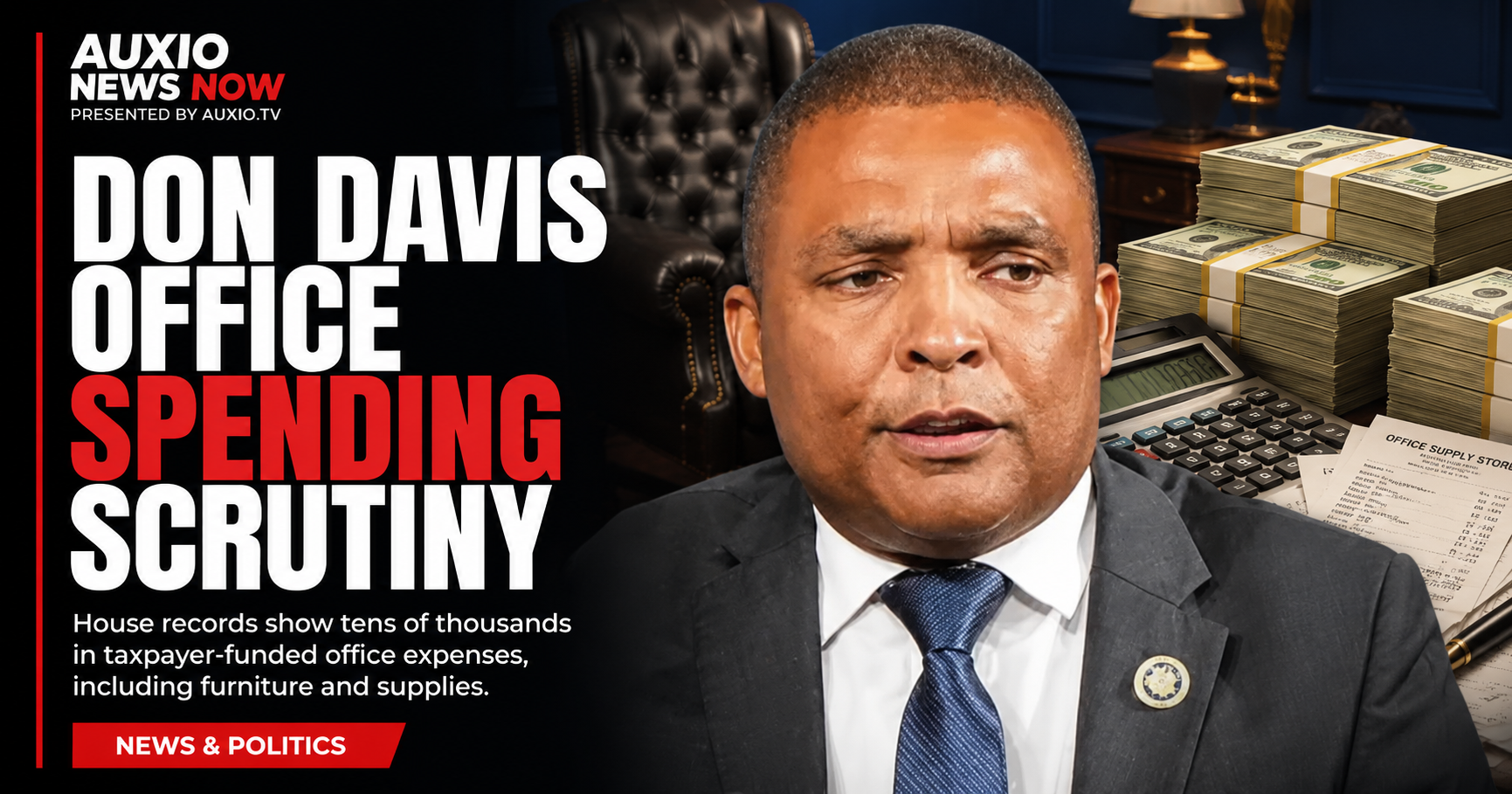
WASHINGTON — Rep. Don Davis’ first year in Congress came with a hefty taxpayer-funded office bill.
Official House spending records show the North Carolina Democrat reported tens of thousands of dollars in office-related expenses in 2023, including substantial purchases categorized as habitation expenses, office supplies and furniture.
The spending is drawing renewed scrutiny as Davis seeks to hold onto one of the most competitive congressional seats in the country.
House records show that in the second quarter of 2023 alone, Davis’ office reported multiple large transactions with Taff Office, including $11,772.35 and $10,202 in “habitation expenses,” along with additional office-supply and furniture purchases.
The same disclosure shows furniture and fixture purchases of $3,588, $1,313 and $1,979, plus thousands more in office supplies.
The House defines a “habitation expense” as a category covering minor office decoration and lower-cost furniture items such as chairs and tables under $500. More expensive furniture is separately reported under furniture and fixtures.
That distinction matters because Davis’ records show spending in both categories, meaning the total office-related bill extended beyond small decorative purchases.
The money came from Davis’ Members’ Representational Allowance, the taxpayer-funded budget each House member receives to operate congressional offices and perform official duties. The House says the allowance is intended to cover expenses such as equipment, supplies, subscriptions, technology and other official office costs.
Davis currently maintains offices in Washington, Elizabeth City, Rocky Mount and Goldsboro.
His office has defended the spending as part of the cost of establishing a new congressional operation and equipping multiple district offices.
But the size of the purchases raises an obvious taxpayer question: how much office furnishing is reasonable for a first-term member of Congress?
The issue is not whether members are legally permitted to furnish their offices. They are.
The issue is whether spending tens of thousands of taxpayer dollars on furniture, decoration and supplies reflects the kind of fiscal restraint voters are entitled to expect from elected officials.
For Davis, the optics are particularly difficult because the records do not describe a handful of incidental office purchases. They show multiple five-figure and four-figure transactions concentrated in the early months of his congressional tenure.
The House disclosure system exists precisely so the public can scrutinize expenditures like these.
And as Davis faces another high-profile election in North Carolina’s 1st Congressional District, those receipts provide opponents — and taxpayers — with a concrete record to examine.
The Bottom Line
Davis may argue the expenditures were necessary to establish congressional offices.
But taxpayers can reasonably ask why setting up those offices required such a large bill for furnishings, supplies and expenses classified by the House as office “habitation.”
The records themselves do not establish wrongdoing.
They do, however, establish something much simpler:
Congressman Don Davis spent a lot of taxpayer money outfitting his offices.
And voters are entitled to decide whether they think they got their money’s worth.