
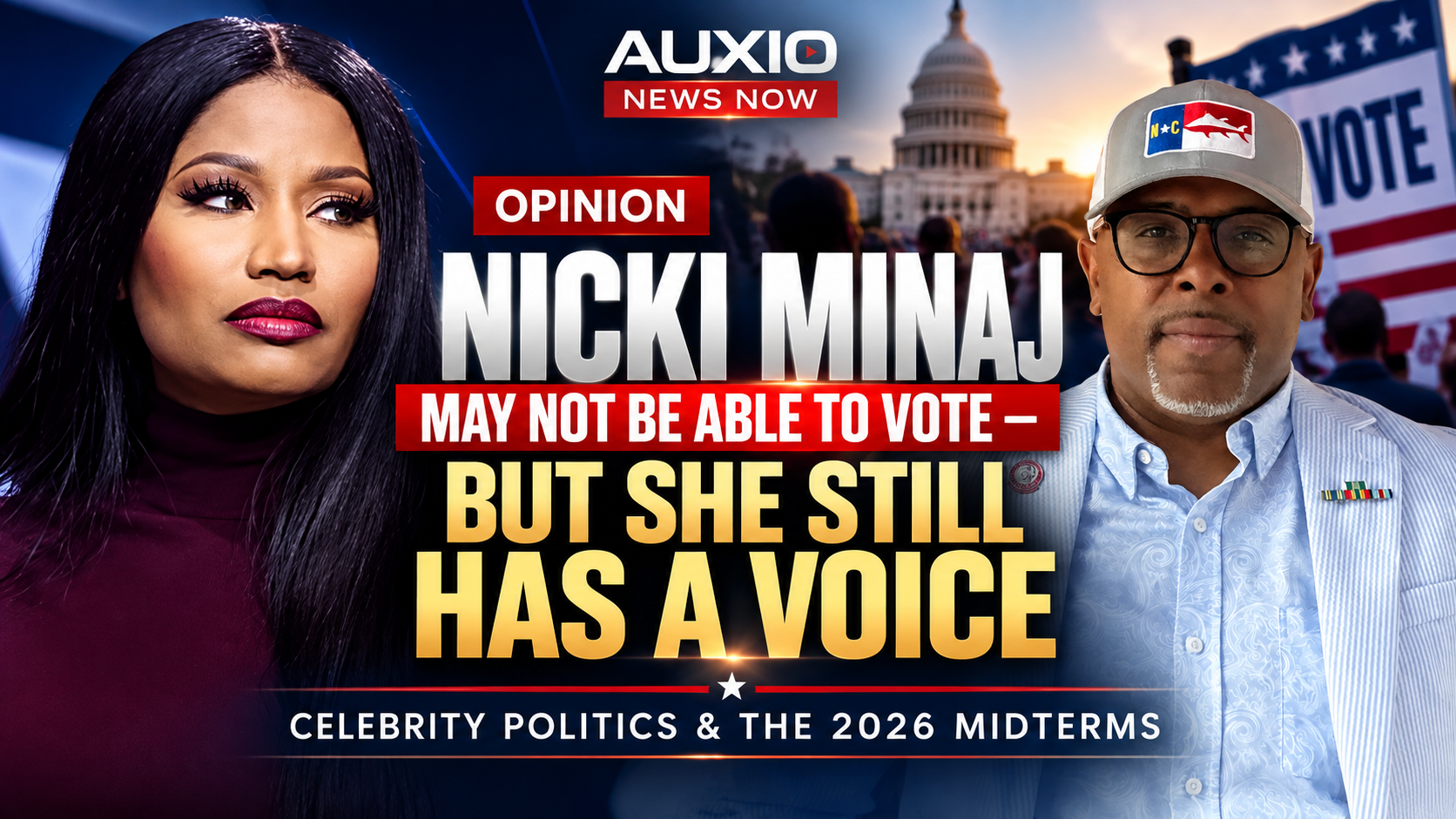
Opinion – By Addul Ali
Admittedly, there is an irony at the center of Nicki Minaj’s recent call for Americans to participate in elections: she may not actually be eligible to cast a ballot herself.
That doesn’t weaken her message.
It may make her participation in America’s political conversation even more interesting.
Minaj was born in Trinidad and Tobago and came to the United States as a child. In 2024, she publicly said she was not an American citizen. In January 2026, she said she was in the process of finalizing citizenship paperwork, but there has been no public confirmation that the process has been completed.
Under federal law, noncitizens—including lawful permanent residents—cannot vote in federal elections.
Yet during her recent interview with Lara Trump, Minaj encouraged young Americans to become politically involved, pay attention to local elections and exercise their right to vote. She went further and encouraged them to “vote red.”
People are free to disagree with that partisan recommendation. But criticizing Minaj simply for participating in the political conversation misses something important about America.
Voting is not the only form of civic participation.
Millions of people who cannot personally cast a ballot are still affected by the decisions government makes.
They work here.
They operate businesses here.
They pay taxes here.
They raise families here.
They live under American laws and regulations.
And they are permitted to have opinions about the direction of the country in which they live.
Minaj’s situation makes that particularly relevant.
She has lived in the United States since childhood, built one of the most successful careers in modern music here and has said publicly that she has paid millions of dollars in U.S. taxes. Whatever someone thinks about her politics, suggesting that she therefore has nothing legitimate to say about American government would be an extraordinarily narrow definition of civic participation.
The ballot belongs to eligible citizens.
The public square does not.
And that distinction matters.
There is another reason Minaj’s participation shouldn’t suddenly be considered objectionable: American politics has welcomed entertainers into political advocacy for decades.
Democrats certainly haven’t been shy about it.
The 2024 Democratic National Convention featured entertainers including Stevie Wonder, John Legend, Pink and Lil Jon, among others. Democrats also established a dedicated creator program designed specifically to expand the convention’s message through influential online personalities.
There was nothing inherently improper about that.
Political parties understand that musicians, actors, athletes and creators can reach people traditional political institutions often cannot.
The standard shouldn’t suddenly change because Nicki Minaj’s political views have moved in a direction some people don’t like.
If celebrities supporting Democrats are exercising their voices, then a rapper supporting Republicans is exercising hers.
And Minaj’s inability—or possible current inability—to vote doesn’t make her message about participation meaningless.
Quite the opposite.
Someone who cannot personally walk into a voting booth can still recognize the significance of those who can.
That is essentially what Minaj told younger Americans: don’t assume your voice doesn’t matter. Don’t pay attention only when there is a presidential election. Learn about your community. Participate in local elections. Understand that the decisions voters make today will affect the world younger generations inherit.
That’s a legitimate civic message regardless of whether you agree with her recommendation to vote Republican.
There is also something particularly American about Minaj’s story.
She was born outside this country, arrived here as a child, built an enormously successful career here and now openly describes her experience as living the American dream.
Someone with that history doesn’t become politically irrelevant simply because citizenship paperwork determines whether she can personally cast a ballot.
Citizenship determines the legal right to vote.
It doesn’t determine whether someone is allowed to care about America.
Nor does it determine whether someone can encourage eligible Americans to exercise rights she may not yet possess herself.
Critics should challenge Minaj’s political arguments if they disagree with them. They should debate the candidates she supports. They can criticize her reasoning, her policies or her conclusions.
That’s how political debate is supposed to work.
But celebrity political participation cannot be celebrated when Beyoncé, John Legend, Stevie Wonder or other entertainers support Democrats and suddenly become inappropriate when Nicki Minaj supports Republicans.
The principle has to survive disagreement.
And perhaps the most interesting part of Minaj’s message is precisely that she may be speaking to millions of Americans about exercising a privilege she herself has not publicly established that she possesses.
She cannot cast their ballots for them.
She can only encourage them to recognize what those ballots represent.
Then American citizens get to make up their own minds.