
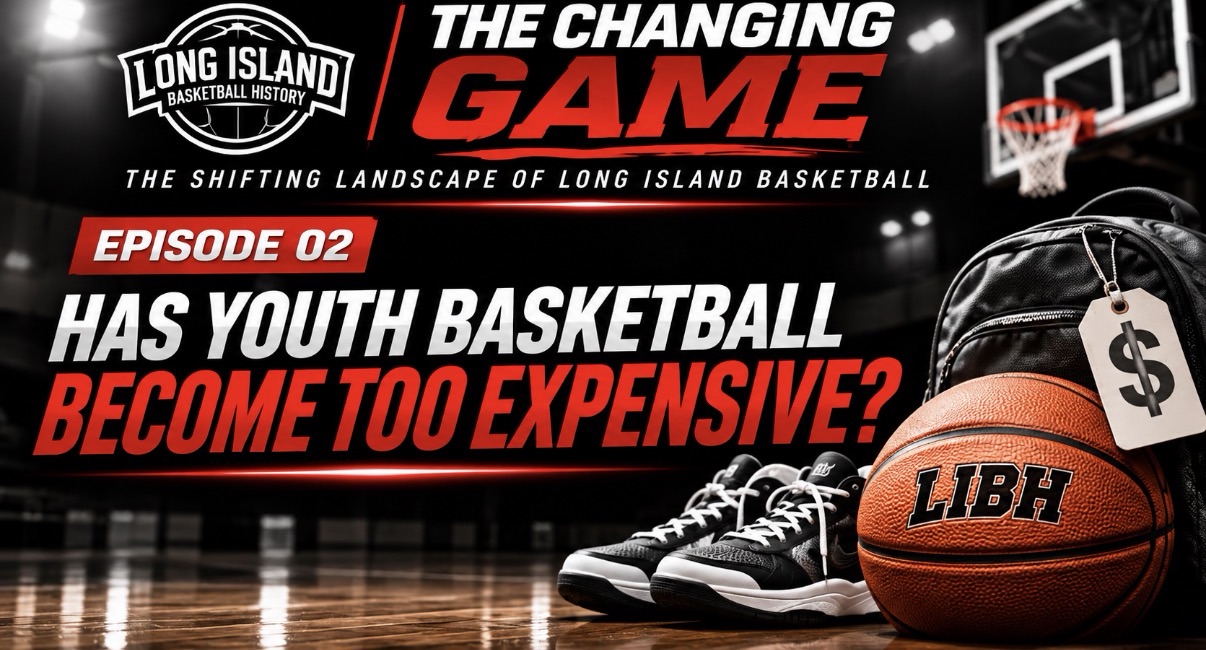
THE CHANGING GAME | EPISODE 02
The Shifting Landscape of Long Island Basketball
There was a time when a basketball, a pair of sneakers and access to a neighborhood court were enough to begin developing as a player.
Community leagues, recreation centers and school gyms provided generations of Long Island athletes with opportunities to compete, develop friendships and discover their potential.
Those opportunities still exist, but the financial landscape surrounding youth basketball has changed.
The Rising Cost of Participation
According to a 2025 report from the Aspen Institute’s Project Play initiative, average family spending on a child’s primary sport increased by 46% between 2019 and 2024.
For basketball specifically, spending increased by 105% during that period.
Between travel basketball, tournament fees, private training, uniforms, equipment, transportation and admission fees, the financial commitment can become overwhelming.
For families raising multiple athletes, those expenses can multiply quickly.
Is Opportunity Becoming a Luxury?
Competitive basketball programs and private trainers can provide tremendous value. Quality instruction, facility rentals, insurance and tournament operations all come at a cost.
The issue is not that people earn a living through basketball. The concern is whether a family’s financial circumstances increasingly determine a child’s access to meaningful development.
How many talented young athletes across Nassau and Suffolk counties are missing opportunities simply because their families cannot afford them?
And how many parents are stretching themselves financially because they fear their child will fall behind?
Reinvesting in Our Communities
Long Island has an opportunity to strengthen its basketball ecosystem through collaboration.
School districts, recreation departments, grassroots organizations, nonprofits and local businesses can help expand access through affordable community leagues, sponsored clinics, scholarships and accessible training programs.
Former players and experienced coaches can also contribute by mentoring the next generation.
This does not require eliminating competitive travel basketball or private training. It requires strengthening the alternatives and creating more pathways for participation.
Every child deserves an opportunity to discover what basketball can offer, whether that leads to a college scholarship or simply a healthier, more confident and disciplined young person.
Basketball should remain a vehicle for opportunity, not another reflection of economic inequality.
A child’s potential should never be measured by a parent’s purchasing power.