Tag: affordable housing

  • Rich Carozza Puts Experience, Housing and Water Infrastructure at Center of Southampton Supervisor Campaign

    Rich Carozza Puts Experience, Housing and Water Infrastructure at Center of Southampton Supervisor Campaign

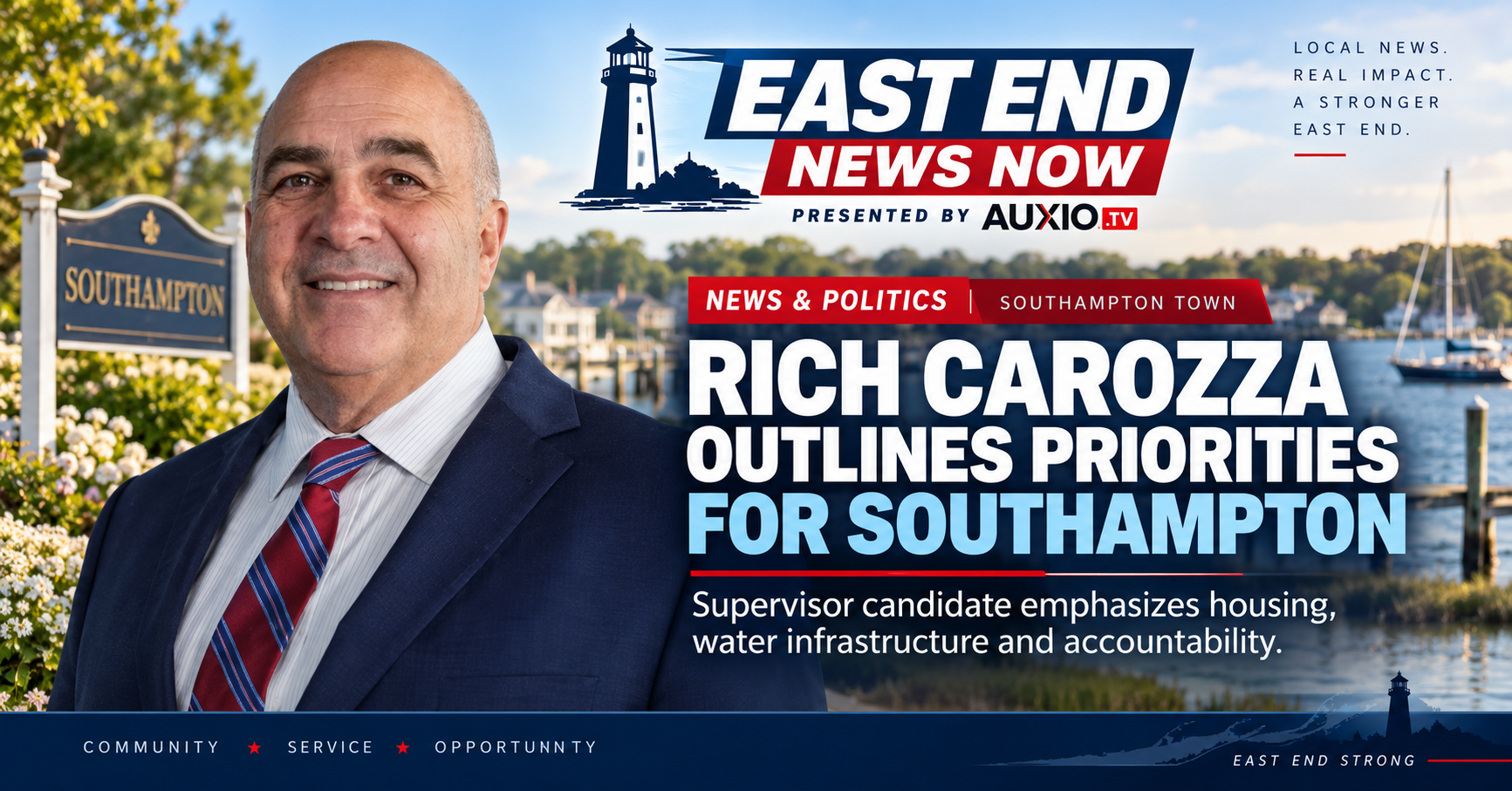
    Rich Carozza is making experience and municipal problem-solving central themes of his campaign for Southampton Town Supervisor, laying out an agenda that focuses on several of the Town’s persistent challenges: housing affordability, water quality, infrastructure and the way major projects are handled at Town Hall.

    Carozza’s campaign website identifies him as the Southampton Republican Committee’s nominee for supervisor in the November 2026 election, where he is challenging incumbent Supervisor Maria Z. Moore. Southampton Town’s official website confirms Moore currently serves as supervisor. 

    Rather than centering his campaign on a single issue, Carozza is presenting his professional background as part of his case for the job.

    According to his campaign, Carozza has more than 35 years of involvement in Long Island politics and experience in real estate development and financial services. The campaign says his work has included financial planning, capital formation, real estate management and site development, along with experience working with municipal officials on land-use, zoning and development matters. It also states that he holds a master’s degree in public administration from LIU Post. Those biographical details are campaign-provided. 

    His policy platform concentrates heavily on development and infrastructure.

    On housing, Carozza proposes increasing housing supply, supporting workforce housing for Town residents and using Town assets and financial tools to address affordability. His platform also singles out Hampton Bays for economic-development initiatives, infrastructure investment and additional parking solutions. 

    Water quality is another major component. Carozza is proposing the development of three sewer districts — East, Central and West — as part of a broader effort to reduce nitrogen entering local waters. His campaign argues that expanded sewer infrastructure could help address pollution associated with harmful algal blooms, low oxygen levels and habitat degradation. 

    Carozza is also calling for changes in how major Town projects and expenditures are presented to residents. His campaign proposes public-comment opportunities related to project spending, additional disclosure regarding project goals and implementation, and what it describes as a stronger requirement for public support before major expenditures move forward. 

    The office he is seeking carries substantial administrative and financial authority. Under Southampton Town’s description of the position, the supervisor serves as the Town’s chief administrative and fiscal officer, presides over Town Board meetings and participates as a voting member of the board. 

    That makes the 2026 supervisor contest a decision not simply over personalities but competing approaches to managing Town government and addressing growth, housing and infrastructure.

    For Carozza, the campaign’s initial pitch is clear: his professional and governmental experience, combined with an infrastructure-focused agenda, is what he wants Southampton voters to consider as the race develops.

    Learn more about his campaign here: https://www.richcarozza.com/

  • Who Can Still Afford to Live on Shelter Island? Town Launches New Housing Survey

    Who Can Still Afford to Live on Shelter Island? Town Launches New Housing Survey

    By East End Now | Auxio.tv News

    Shelter Island is taking another look at one of the most difficult questions facing the East End: who can still afford to live in the communities where they work?

    The Town launched a new 2026 Housing Needs Assessment survey on August 25, asking residents, workers and business owners to describe the housing pressures they are experiencing. The survey is part of an update to Shelter Island’s 2023 Community Housing Plan. 

    Town officials say the new assessment is intended to measure current housing supply, demand, affordability and gaps, while accounting for changing population trends and market conditions. The results are expected to help shape future housing programs and policy decisions. 

    The survey is not limited to homeowners.

    It asks for input from year-round and seasonal residents, renters, people living with family or friends, workers who commute to the island, business owners and people experiencing temporary or unstable housing. The Town is also offering separate business surveys and Spanish-language versions. 

    That broad approach reflects the nature of Shelter Island’s housing problem.

    The Town’s own planning documents have acknowledged for years that affordable housing is difficult to produce on the island. A draft housing chapter for Shelter Island’s comprehensive plan notes that only one six-home ownership project had been completed since 1996, and because those houses were not permanently deed-restricted, the island no longer had any designated affordable units from that project. 

    The 2023 Community Housing Plan attempted to create a framework for addressing that shortage without importing large-scale development models that do not fit the island.

    Among its recommendations were year-round rental housing on Town-owned property and expanded use of accessory dwelling units. The plan identified two Town properties for potential housing and contemplated no more than two units at 69 North Ferry Road and eight units at 12 South Ferry Road. It specifically rejected large multistory apartment buildings as inappropriate for Shelter Island. 

    That distinction is important.

    Shelter Island does not have unlimited land, infrastructure or environmental capacity. The challenge is not simply producing the largest possible number of units. It is finding ways to keep workers, young families and longtime residents on the island without changing the character of the community that made people want to live there in the first place.

    The Town has also been pursuing accessory dwelling units as one part of that strategy. Its Community Housing Board promotes an ADU program that can help eligible property owners create secondary year-round housing units while maintaining residency and affordability requirements. 

    The new survey gives the Town a chance to find out whether those approaches are actually matching current needs.

    Housing markets can change quickly. A plan written three years ago may no longer reflect what renters are paying, what workers can afford or how many businesses are struggling to recruit employees because those employees cannot find housing nearby.

    That is what makes this survey more than another planning exercise.

    The central question is whether Shelter Island can preserve a functioning year-round community in a market where the value of property can increasingly exceed the earning power of the people who keep that community running.

    The Town is asking residents and workers to help answer that question.

    What happens after the answers come in will matter more.

    East End Now — Your East End. Your News.