Tag: affordable_housing

  • Suffolk Town Leaders Join Forces Over Rising Costs, Waste Challenges and State Mandates

    Suffolk Town Leaders Join Forces Over Rising Costs, Waste Challenges and State Mandates

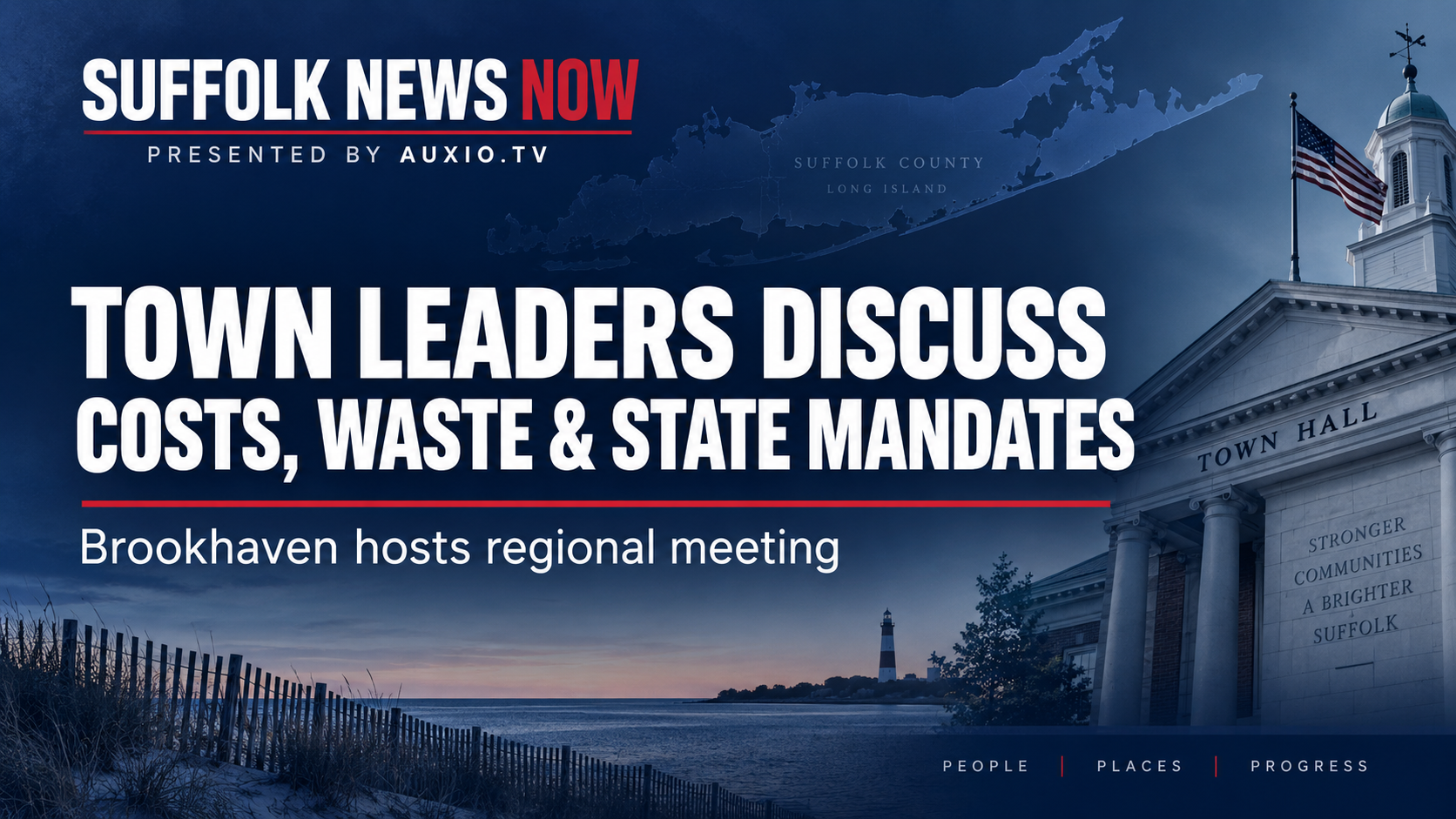
    FARMINGVILLE, NY — Leaders from several Suffolk County towns met at Brookhaven Town Hall to discuss rising costs, solid-waste challenges and state policies they say are putting additional pressure on local governments and taxpayers.

    Brookhaven Town Supervisor Daniel J. Panico hosted the September 18 meeting with Southampton Town Supervisor Maria Moore, Smithtown Town Supervisor Ed Wehrheim, Smithtown Councilman Thomas W. Lohmann, Southold Town Supervisor Albert J. Krupski Jr., Babylon Deputy Supervisor Tony Martinez, Brookhaven Councilman Neil A. Manzella and representatives from the New York Association of Towns. 

    According to the Town of Brookhaven, the discussion focused on several issues affecting municipalities across Long Island, including rising health-insurance and pension contributions, higher fuel and equipment costs, state funding opportunities through the Environmental Bond Act and the effect of unfunded state mandates on local taxpayers. 

    Solid-waste disposal was also a major topic. Brookhaven officials have previously warned that Long Island faces a growing waste-management challenge as disposal options become more limited, particularly with the planned closure of the Brookhaven Town Landfill. Town officials have argued that expanding rail capacity could be part of a longer-term regional solution. 

    Panico also raised concerns about state legislation that he said can diminish local control and impose policies that do not always reflect conditions on Long Island.

    “Too often, we see a city-centric State Legislature advancing policies that may work for New York City but simply do not reflect the needs or realities of Long Island and towns throughout New York State,” Panico said. 

    He added that local officials need to work together on issues including unfunded mandates, rising municipal costs and home-rule authority. 

    The meeting also included discussion of a possible Long Island conference that would bring town officials together to address shared concerns and coordinate regional advocacy. No formal date or structure for that conference was announced. 

    The gathering reflects a broader effort among Suffolk municipalities to coordinate on issues that cross town boundaries, particularly waste disposal, infrastructure costs and state-local government relations.
  • Hampton Bays Residents Question Lack of Hometown Voice in Southampton Government

    Hampton Bays Residents Question Lack of Hometown Voice in Southampton Government

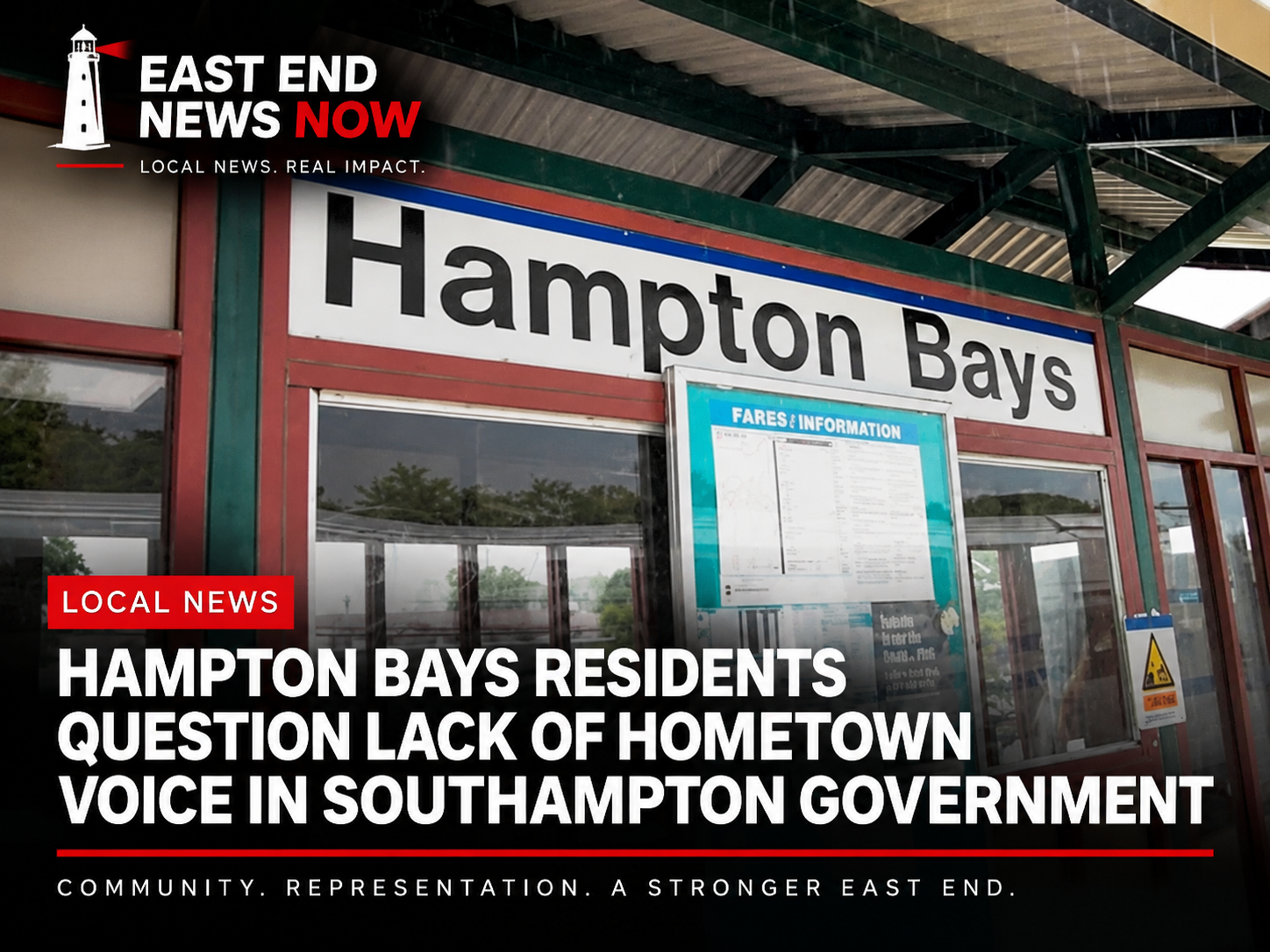
    HAMPTON BAYS — Hampton Bays currently has no resident serving on the Southampton Town Board and no resident serving on the elected Southampton Town Trustees, a gap that is fueling renewed concerns about whether one of the Town’s largest hamlets has enough of a direct voice in local government.

    The issue has taken on greater significance since the loss of former Councilman Rick Martel, a longtime Hampton Bays resident who had served as one of the community’s most recognizable voices in Town government.

    Martel returned to the Town Board in 2025 after winning a special election, but narrowly lost his seat later that year. He died in June 2026.

    During his time in office, Martel was closely associated with Hampton Bays issues and served as a liaison to the community.

    Today, the Southampton Town Board consists of Supervisor Maria Moore and Councilmembers Michael Iasilli, Cyndi McNamara, Tom Neely and William Pell IV. The Town Trustees are James Mack, Matthew Parsons, Joseph McLoughlin, Hannah Pell-O’Farrell and Sara Topping.

    None is a Hampton Bays resident.

    Former Hampton Bays Civic Association President Ray D’Angelo, a longtime resident, recently addressed that concern directly in a letter titled Hampton Bays Deserves a Voice.

    D’Angelo pointed to a series of 2026 issues affecting the hamlet, including traffic congestion, parking, water-pressure concerns, senior-center access and development pressure.

    “Hampton Bays deserves more than promises and public relations,” D’Angelo wrote. 

    Letter HB dicontent.docx

    His broader argument is that residents need stronger input before decisions affecting the community are made, rather than after problems arise.

    That concern is especially relevant when it comes to the Southampton Town Trustees.

    The Trustees oversee more than 25,000 acres of Southampton’s shores, waterways, marshes and bottomlands, with responsibilities that include public access, water quality and marine resources. Their administrative office is located in Hampton Bays.

    Yet the hamlet currently has no resident serving on the five-member Trustee board.

    The upcoming Trustee election could make representation an even larger issue.

    All five current Trustees are seeking another term, while Hampton Bays resident John Carson is also running for Trustee.

    Carson brings a commercial-fishing background and a direct connection to the hamlet, making the race about more than party control. It also raises a broader question about whether Hampton Bays should once again have a resident sitting on one of the Town’s most important elected boards.

    The issue is not whether Town Board members or Trustees who live elsewhere can represent Hampton Bays.

    They can.

    The question is whether that is the same as having someone at the table who lives with Hampton Bays traffic, water, marine and development issues every day.

    For years, Martel provided that kind of hometown connection on the Town Board.

    Right now, Hampton Bays does not have it on either board.

    And D’Angelo’s letter makes clear that for some longtime residents, that absence is becoming increasingly difficult to ignore.

  • Blakeman Takes Local-Control Fight With Hochul Statewide

    Blakeman Takes Local-Control Fight With Hochul Statewide

    By Auxio News Now | Auxio.tv News

    Nassau County Executive Bruce Blakeman is taking a dispute over immigration enforcement and turning it into a broader argument about state power, public safety and local control.

    The immediate fight centers on New York’s move to block local law-enforcement agencies from maintaining certain formal cooperation agreements with U.S. Immigration and Customs Enforcement.

    Nassau County had participated in a federal 287(g) arrangement, which allows designated local officers to perform limited immigration-enforcement functions under federal supervision. After New York enacted restrictions on those agreements, Blakeman ended Nassau’s participation rather than defy state law.

    But he did not abandon the issue.

    Instead, Nassau has moved into the legal and political fight over whether Albany should be able to prevent counties from choosing that kind of cooperation with federal authorities.

    That gives Blakeman a useful campaign argument as he runs for governor.

    His case is straightforward: counties are responsible for public safety on the ground, yet Albany is increasingly setting limits on how those counties can work with federal law enforcement.

    Supporters of the state law see the issue differently.

    They argue local police should focus on criminal enforcement rather than civil immigration matters, and that close cooperation with ICE can discourage some immigrants from reporting crimes or cooperating with police.

    That is the policy divide.

    But Blakeman is trying to make the dispute about more than immigration.

    For him, the larger question is whether Albany should continue expanding its authority over decisions traditionally handled by counties and municipalities.

    That argument has resonance beyond Nassau County.

    Long Island officials regularly clash with the state over policing, housing, zoning, energy projects and other policies where local governments argue that statewide rules do not always reflect local conditions.

    Blakeman is positioning himself as the candidate willing to push back.

    His record in Nassau helps him make that case. He has emphasized police hiring, opposition to tax increases and a more aggressive approach to public safety while presenting county government as an alternative to Albany’s governing philosophy.

    The ICE dispute gives that message a specific example.

    Rather than simply arguing that New York’s immigration policy is too permissive, Blakeman can point to a situation in which a county chose one enforcement approach and the state government effectively took that option away.

    Whether the courts agree with that argument is a separate question.

    State government has broad authority to regulate municipalities, and home rule in New York has never meant that counties can disregard general state laws.

    Still, the political issue remains.

    How much discretion should local governments have when the people running those governments believe a statewide policy makes their communities less safe?

    Governor Kathy Hochul and Democratic lawmakers have taken the position that some rules should apply consistently across New York.

    Blakeman is arguing that greater local discretion is itself a form of accountability.

    If a county executive or sheriff makes the wrong call, local voters can respond.

    If the decision is made in Albany, responsibility becomes more distant.

    That is the contrast Blakeman is taking into the governor’s race.

    The fight may have started with ICE.

    It is becoming a much larger argument over who gets the final say in New York government.

    Auxio News Now | Auxio.tv News

  • Moore Faces Questions as Southampton Tax Rate Climbs 7.7%

    Moore Faces Questions as Southampton Tax Rate Climbs 7.7%

    SOUTHAMPTON — Southampton Town Supervisor Maria Moore is heading into another election season with a record that now includes a noticeable increase in what taxpayers are being asked to pay.

    The town’s own 2026 budget message says the tax rate increased 7.7%, translating to roughly $118 more for a home assessed at $1 million. Moore’s administration attributed the increase largely to higher employee health insurance and pension costs and said the town remains financially strong. 

    But for voters, the explanation may be less important than the direction of the numbers.

    The town’s 2026 budget charts show the full-town tax levy rising from about $31.47 million in 2025 to $36.84 million in 2026 — an increase of roughly $5.37 million, or 17%. 

    That puts Moore in an increasingly difficult position politically: defending higher costs while arguing that Southampton residents are receiving enough in return.

    Moore owns the fiscal record

    The supervisor is not merely another member of the Town Board.

    Under Southampton Town’s own description of the office, the supervisor serves as the town’s chief administrative and fiscal officer, oversees town operations and participates directly in the management of town finances. 

    That means the 2026 numbers are likely to become part of the debate over Moore’s stewardship of Town Hall.

    Her administration can point to legitimate strengths. Southampton received the highest AAA credit rating from Standard & Poor’s in 2024, and Moore’s budget message cited strong reserves, manageable debt and conservative budgeting as evidence of the town’s financial stability. 

    But a strong bond rating and a rising tax bill are two different measurements.

    One tells Wall Street that Southampton can reliably meet its obligations.

    The other tells homeowners what government is costing them.

    The question shifts from stability to value

    Southampton is an expensive town to operate. Labor costs rise. Health insurance rises. Infrastructure requires investment. Few serious candidates can credibly promise that government expenses will simply stop increasing.

    The harder question for Moore is whether residents believe the growth in government costs has produced a corresponding improvement in daily life.

    Housing affordability remains an enduring concern. Traffic and development continue to dominate discussions across multiple hamlets. Residents routinely confront questions involving infrastructure, code enforcement, public safety and the pace of major town projects.

    Those are areas where an incumbent eventually has to defend outcomes, rather than intentions.

    Moore’s 2026 departmental assignments underscore how directly many of those issues fall under her responsibility. Her portfolio includes finance, human resources, land management, municipal works, public safety, the town attorney and several major special projects. 

    That gives her substantial authority.

    It also leaves fewer places to shift responsibility when voters ask what has been accomplished.

    An incumbent has to defend the record

    For a challenger, running for supervisor can be comparatively simple: identify problems and promise a different approach.

    An incumbent carries a heavier burden.

    Moore has to make the case that Southampton’s higher tax burden, expanding expenditures and ongoing projects represent money well spent.

    The town remains financially stable. That deserves acknowledgement.

    But financial stability is the minimum residents should expect from one of Long Island’s wealthiest municipalities.

    As the supervisor’s race develops, the more consequential question may be whether Southampton residents believe Town Hall has become more effective at the same pace that it has become more expensive.

    That is a question Moore, as the town’s chief fiscal officer, will increasingly have to answer.