
Tag: Department of the Interior

  • Interior Opens More Than 92 Million Acres to Hunting as Access Expands Nationwide

    Interior Opens More Than 92 Million Acres to Hunting as Access Expands Nationwide

    WASHINGTON — The U.S. Department of the Interior has finalized what it calls the largest expansion of hunting and sport-fishing opportunities in U.S. Fish and Wildlife Service history, opening or expanding access across refuges and hatcheries in 32 states. 

    Under the final rule, more than 92 million acres — over 95% of National Wildlife Refuge System lands — are available for hunting. The department says the action creates 1,488 new hunting and sport-fishing opportunities across 111 field stations, including 107 national wildlife refuges and four national fish hatcheries. 

    Interior defines an “opportunity” as the ability to hunt or fish a specific species at a specific location.

    Secretary of the Interior Doug Burgum framed the expansion as part of the Trump administration’s push to reduce federal barriers and give hunters and anglers greater access to public lands.

    “America’s hunters and anglers now have something significant to look forward to in the fall as we plan to open and expand hunting and fishing opportunities nationwide,” Burgum said. 

    The rule also establishes first-ever hunting or sport-fishing opportunities at 14 refuges and three hatcheries. Interior says the changes include expanded access for upland game, migratory birds, big game and sport fishing at locations that were previously closed or more limited. 

    Cutting Federal Red Tape

    The expansion is also part of a broader Interior Department effort to simplify federal hunting and fishing regulations.

    The Fish and Wildlife Service is making more than 1,000 modifications to existing regulatory provisions, with the goal of better aligning federal rules with state fish and wildlife regulations. Interior says the changes are intended to reduce confusion for hunters and anglers while preserving conservation requirements. 

    The department followed that action with another change on Aug. 27, finalizing a streamlined process for migratory game-bird hunting seasons. Instead of repeating federal rulemaking every year, the Fish and Wildlife Service will establish seasonal conditions through annual hunting memoranda while continuing to use biological data to determine harvest levels. 

    Conservation Still Applies

    The expansion does not mean every acre of refuge land can be hunted without restriction.

    The Fish and Wildlife Service says hunting and fishing remain subject to station-specific rules and can only be allowed when they are compatible with each refuge or hatchery’s conservation mission. 

    The National Wildlife Refuge System currently includes 573 national wildlife refuges and 38 wetland management districts, drawing about 71 million visitors annually. 

    Interior also points to the economic role of outdoor recreation. Fish and Wildlife Service data cited by the department says more than 39.9 million Americans fish and 14.4 million hunt, contributing more than $144 billion annually to the U.S. economy. 

    Why It Matters

    The final rule gives the Trump administration a major public-lands policy win heading into the fall hunting season.

    It also signals how Interior under Burgum is approaching federal land management: more recreational access, closer alignment with state rules and fewer federal procedural barriers, while maintaining the department’s statutory conservation responsibilities.
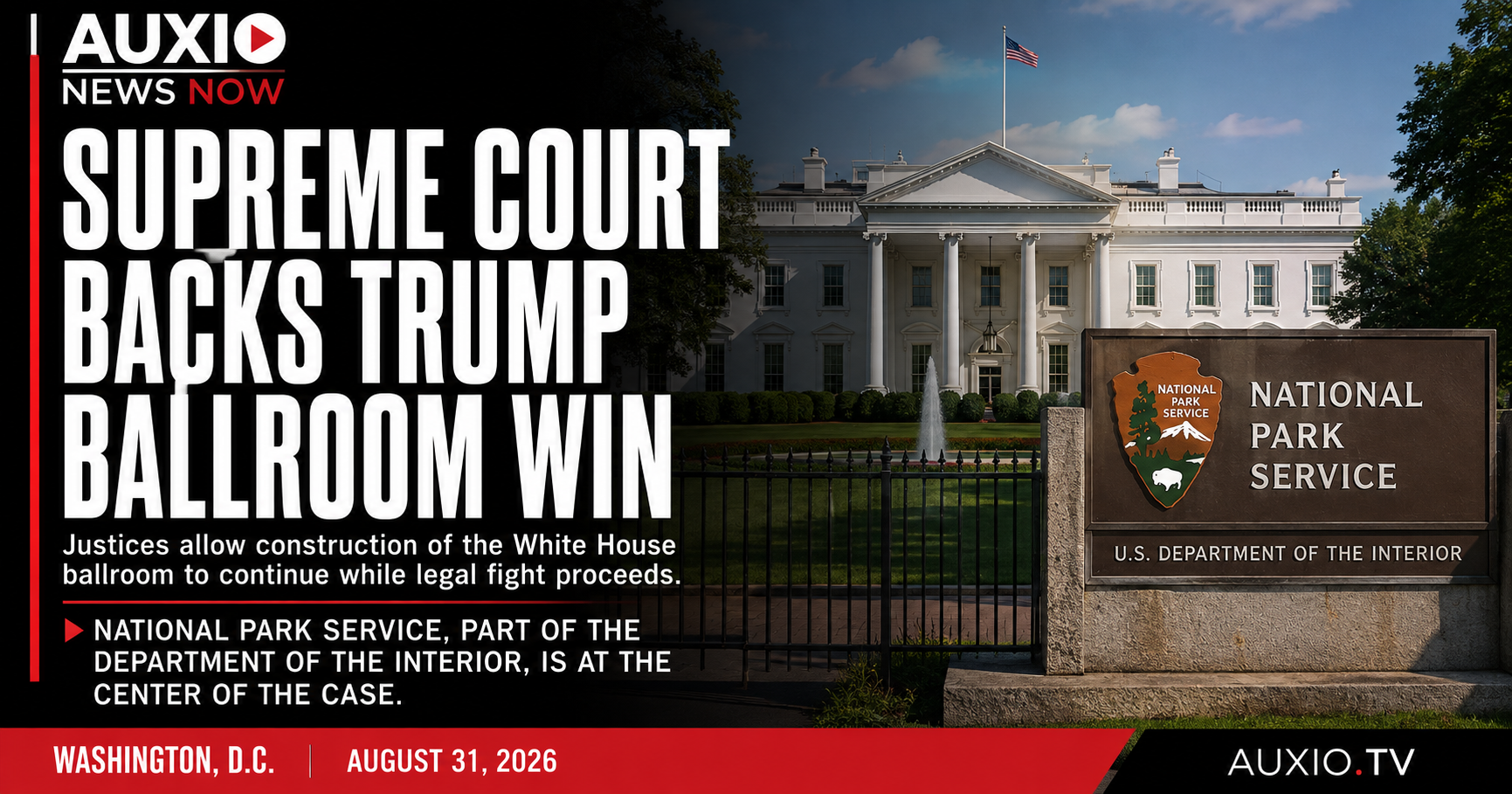
  • Supreme Court Backs Trump Administration in White House Ballroom Fight

    Supreme Court Backs Trump Administration in White House Ballroom Fight

    WASHINGTON — The U.S. Supreme Court has cleared the way for construction of President Donald Trump’s White House ballroom project to continue, granting the administration’s request to stay a lower-court injunction while the broader legal fight proceeds.

    The Aug. 31 order came in National Park Service, et al. v. National Trust for Historic Preservation in the United States, placing the National Park Service — an agency within the Department of the Interior — directly at the center of the case. 

    The Court stayed an injunction issued by the U.S. District Court for the District of Columbia that had restricted portions of the East Wing project. The stay remains in effect while the government seeks Supreme Court review of the case. 

    The administration’s application was filed by the Solicitor General on behalf of the National Park Service and other federal applicants. The government argued that the lower-court order threatened to interrupt an integrated White House construction project and create security and operational consequences.

    The Department of the Interior’s role runs through the National Park Service, which manages President’s Park, including the White House grounds.

    NPS prepared the federal environmental assessment for the White House East Wing Modernization and State Ballroom project. According to the agency’s planning record, the selected action calls for replacing the existing East Wing with a new building that will house the White House State Ballroom and associated facilities. 

    The agency also completed a Finding of No Significant Impact, concluding that the selected project would not significantly impair park resources under the standards used by the National Park Service. 

    That makes Interior’s role more than administrative background. One of its agencies conducted the project review, manages the federal park property involved and is the lead named federal applicant before the Supreme Court.

    What the Supreme Court Decided

    The Court’s order is a significant procedural victory for the administration, but it does not constitute a final ruling that the ballroom project is lawful.

    The stay allows construction to continue while the litigation proceeds. 

    Chief Justice John Roberts dissented, joined by Justices Sonia Sotomayor, Elena Kagan and Ketanji Brown Jackson.

    Roberts argued that the construction is likely unlawful because federal law generally prohibits construction of a new building or structure on federal park grounds in Washington without express congressional authorization. He noted that the project sits within President’s Park. 

    That dispute remains unresolved.

    Why It Matters

    The case now involves more than a White House renovation.

    It raises questions about presidential authority over federal property, Congress’ role in authorizing construction in Washington and the extent to which Interior Department agencies can approve and manage major changes to historic federal property.

    For the Trump administration, however, the immediate result is straightforward: the lower-court restriction has been stayed, and construction can continue while the case moves forward.