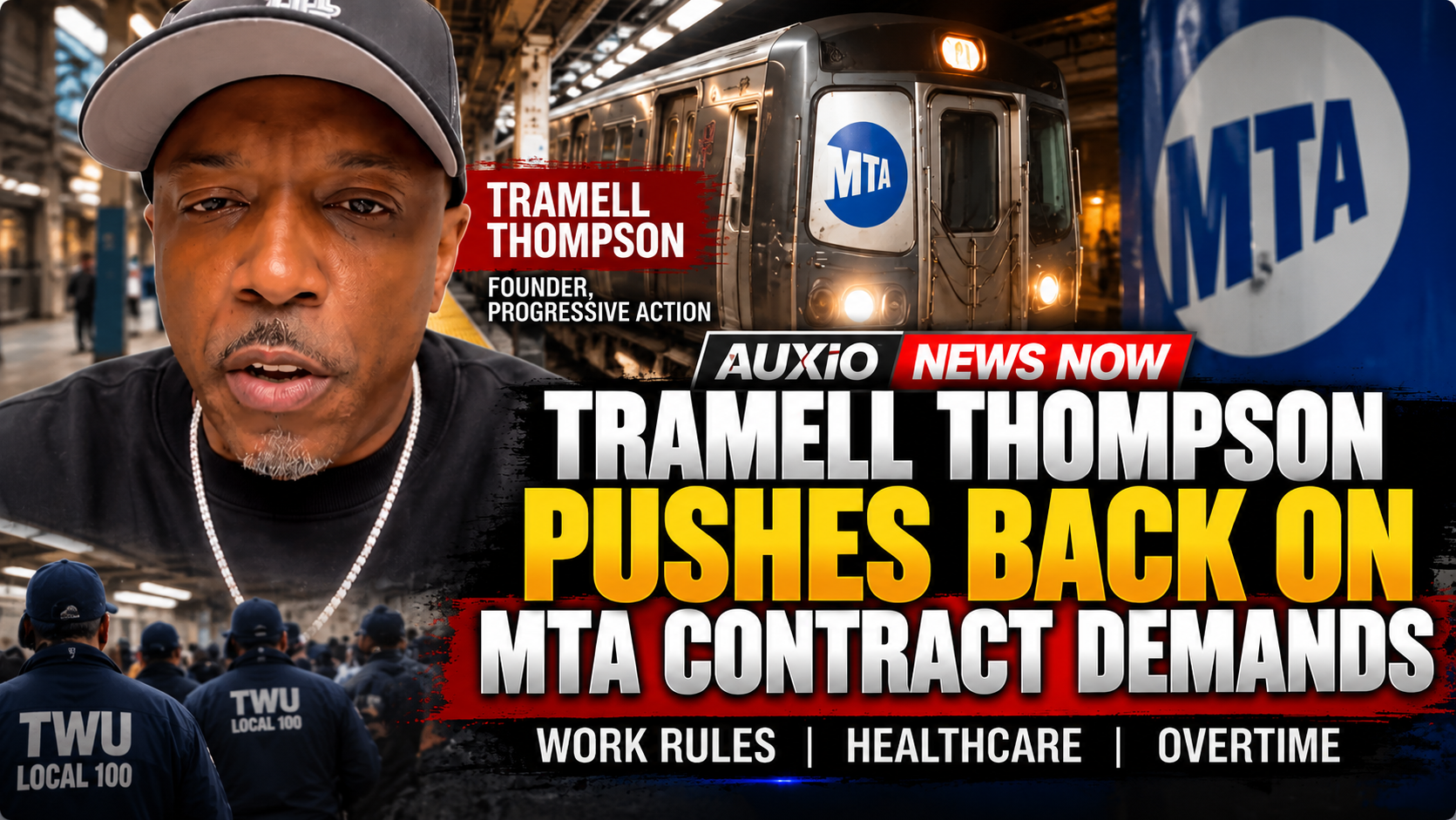
NEW YORK, NY — Transit labor advocate Tramell Thompson, founder of Progressive Action, is pushing back against the MTA’s latest contract demands, arguing that workers are being asked to give up too much in exchange for raises.
In a recent social media post, Thompson criticized MTA leadership and Chair and CEO Janno Lieber, saying transit workers are being asked to surrender work-rule protections, pay more toward healthcare and then face criticism for working overtime when the system remains understaffed.
“The MTA wants transit workers to give up work rules for raises, pay MORE for healthcare, and then complains when workers take overtime to perform work that STILL has to get done,” Thompson wrote.
Thompson, who founded Progressive Action and has worked inside New York City Transit, has built a following around rank-and-file labor issues, workplace safety and union accountability. His social media profile also makes clear that his views are his own and are not presented on behalf of any union or other entity.
The dispute comes amid ongoing negotiations between the MTA and Transport Workers Union Local 100, which represents tens of thousands of New York City Transit employees.
According to TWU Local 100, management proposals presented during bargaining have included higher employee healthcare contributions, changes to prescription benefits, tighter sick-leave rules and changes affecting overtime eligibility and premium pay. The union has opposed many of those proposals.
Lieber has publicly said the MTA wants to revisit certain work rules and healthcare costs as part of a new contract, arguing that the agency needs greater flexibility and more consistent employee availability. He has described some existing provisions as outdated and said collective bargaining is the appropriate venue for changing them.
Thompson’s response reflects the other side of that argument.
He said transit employees worked throughout the COVID-19 pandemic, often in difficult underground conditions, and continue to keep the system operating every day.
“If overtime is the problem, HIRE ENOUGH PEOPLE!” Thompson wrote. “If workplace health is the concern, MAKE THE WORKPLACE HEALTHIER!”
He added that workers are not seeking special treatment but are negotiating over the value of the work they perform.
The union itself has made similar arguments during negotiations, saying its members are seeking substantial wage increases while resisting proposals that would increase healthcare costs or reduce contractual protections.
The current dispute underscores a familiar tension in public transit labor negotiations: management is seeking lower costs and greater operational flexibility, while workers are trying to preserve compensation, benefits and longstanding workplace protections.
For Thompson, the central issue is whether workers should be asked to finance their own raises through concessions elsewhere in the contract.
The negotiations remain ongoing, and no final agreement has been announced.