Tag: Southampton Town Trustees

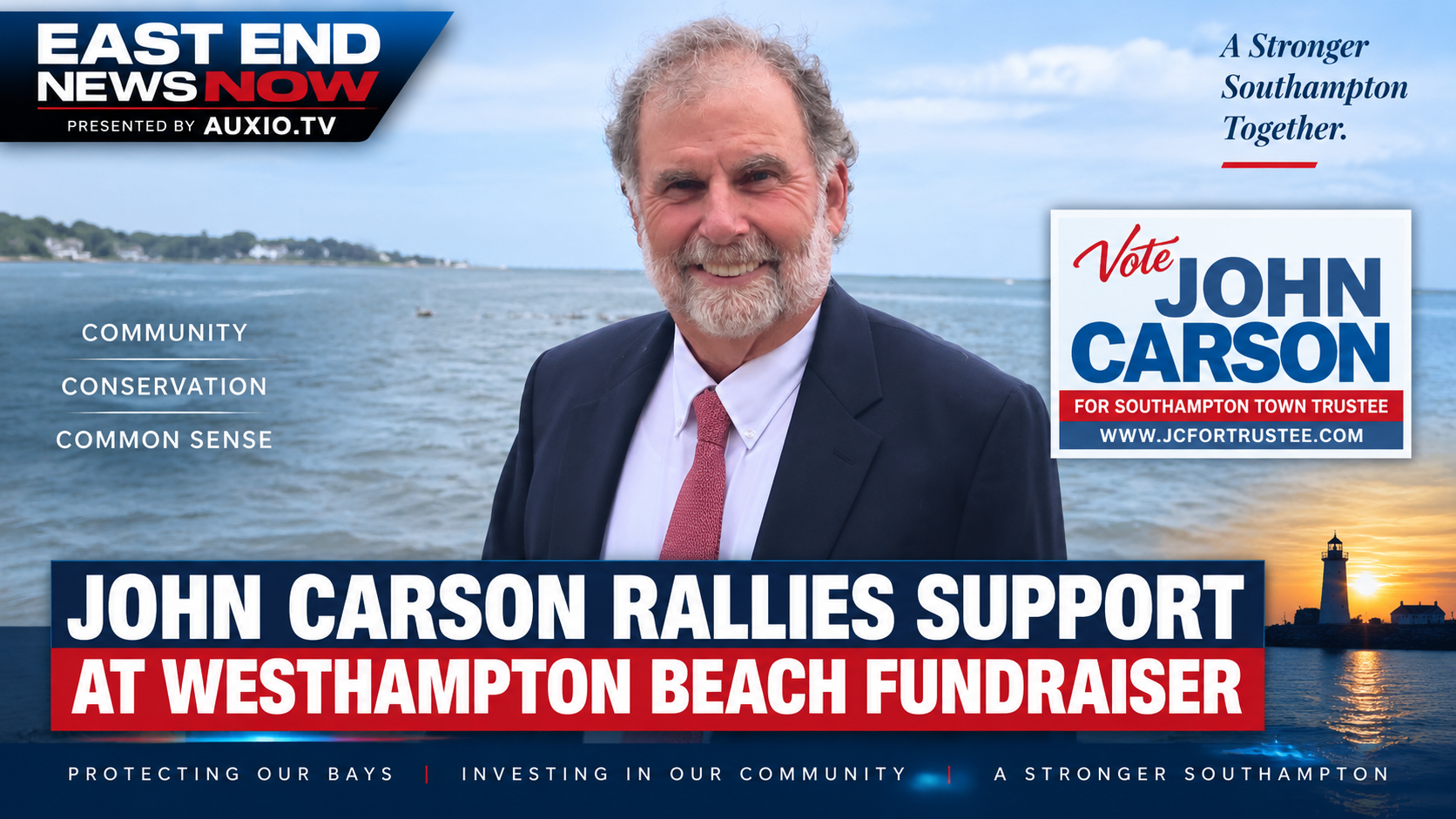
  • John Carson Rallies Support at Westhampton Beach Fundraiser

    John Carson Rallies Support at Westhampton Beach Fundraiser

    WESTHAMPTON BEACH, N.Y. — Southampton Town Trustee candidate John Carson brought together town officials, former trustees, friends, family and community members for a campaign fundraiser at the VFW Hall in Westhampton Beach as he continues his campaign for a seat on the Southampton Town Trustees.

    Among those attending were Southampton Town Clerk Sundy Schermeyer, Councilwoman Cyndi McNamara, Councilman Bill Pell, and former Town Trustees Scott Horowitz and Edward Warner Jr. Southampton Town’s official records confirm Schermeyer, McNamara and Pell currently hold their respective town offices; town records also identify Horowitz and Warner as members of the Board of Trustees in the prior term. 

    Carson used the event to explain why he decided to seek the Trustee position, telling those gathered that he is running to give back to the town he has been both “blessed and lucky to call home for five decades.”

    The Southampton Town Trustees have a particularly distinct role in local government because of their responsibilities involving the town’s waterways and related resources, making knowledge of those issues a central theme of the evening.

    McNamara offered a personal assessment of Carson, describing him as “an all-around good guy” who genuinely loves his community.

    Schermeyer focused on Carson’s familiarity with the issues that would come before the Trustees, saying he is someone who could “hit the ground running” because of his knowledge of what is needed to protect Southampton’s bays and waterways.

    Southampton Town Councilman Bill Pell, John Carson & Southampton Town Clerk Sundy Schermeyer.

    Former Trustees Horowitz and Warner also spoke in support of Carson’s candidacy. Both emphasized the importance of electing someone they believe understands Southampton’s waters as well as the responsibilities that come with serving as a Town Trustee.

    John Carson and Scott Horowitz

    Their comments centered on the need for the Trustee board to include members with practical knowledge of the waterways and an understanding of the institution itself.

    Carson’s campaign has positioned his connection to Southampton and its waters as a central part of his candidacy. At the fundraiser, he tied that experience to a broader message of public service and giving back to the community where he has spent much of his life.

    The event also gave Carson an opportunity to meet with residents and supporters as the campaign moves closer to Election Day.

    His campaign materials list early voting from October 24 through November 1, with Election Day on Tuesday, November 3.

    The fundraiser was ultimately both a campaign event and a gathering of people with long-standing connections to Southampton Town government and the local community.

    For Carson, the message of the evening was straightforward: after five decades calling Southampton home, he is asking residents for the opportunity to serve the town through one of its oldest local institutions.

  • Southampton Town Trustees Face Questions Over Experience and Public Communication

    Southampton Town Trustees Face Questions Over Experience and Public Communication

    SOUTHAMPTON, N.Y. — The Southampton Town Trustees oversee roughly 25,000 acres of shores, waterways, marshes and bottomlands, along with issues involving public access, water quality, docks, bulkheads and marine resources.

    But less than a year after a major turnover reshaped the board, residents have relatively little public information showing how the current Trustees are handling that broad responsibility.

    The current board consists of James Mack, Matthew Parsons, Joseph McLoughlin, Hannah Pell-O’Farrell and Sara Topping. The 2025 election removed longtime Trustees Edward Warner Jr. and Scott Horowitz, taking years of institutional and maritime experience off the board at once.

    That loss of experience matters because the Trustees are not a ceremonial body. Their authority is tied to centuries-old public rights and a complicated mix of environmental, maritime and access issues.

    The current board now has to show that it can maintain that institutional knowledge while also keeping residents informed.

    So far, its public-facing communication has been limited.

    The Trustees’ official Town News Flash shows very few current updates, despite the scope of the board’s responsibilities.

    Screenshots of the Trustees’ Facebook activity reviewed by East End News Now also show a public message heavily centered on piping plover movements, beach restrictions and related access changes.

    Those updates are legitimate. Piping plovers are protected shorebirds, and their nesting activity can affect beach-driving access.

    But the concern is the narrowness of the overall message.

    The Trustees are also responsible for water quality, shellfish, fisheries, marine infrastructure, docks, public access and other issues affecting communities across Southampton.

    If substantial work is being done in those areas, residents should be hearing more about it.

    The public should not have to attend every Trustee meeting or search through municipal records simply to understand what its elected officials are doing.

    The communication issue is especially important because the current board is still establishing itself after the loss of veteran members.

    The question is not whether the current Trustees care about Southampton’s waterways.

    The question is whether they have demonstrated the experience, visibility and responsiveness expected from a board with this much authority.

    That question becomes even more important as legislation advances that would move Southampton Town Trustee terms from two years to four years.

    Supporters say longer terms would provide greater political stability.

    But before Trustees spend twice as much time between elections, residents have every right to ask whether the current board has demonstrated enough performance and accountability to justify that change.

    There is no evidence of corruption or wrongdoing by the current Trustees.

    But accountability does not require a scandal.

    It requires communication.

    For a board responsible for 25,000 acres of public resources, occasional notices and a social-media presence dominated by piping plover updates are not enough to give residents a full picture of what their elected Trustees are doing.

    The current board inherited an important institution.

    Now it has to prove it can lead it.