Tag: Suffolk County Health Department

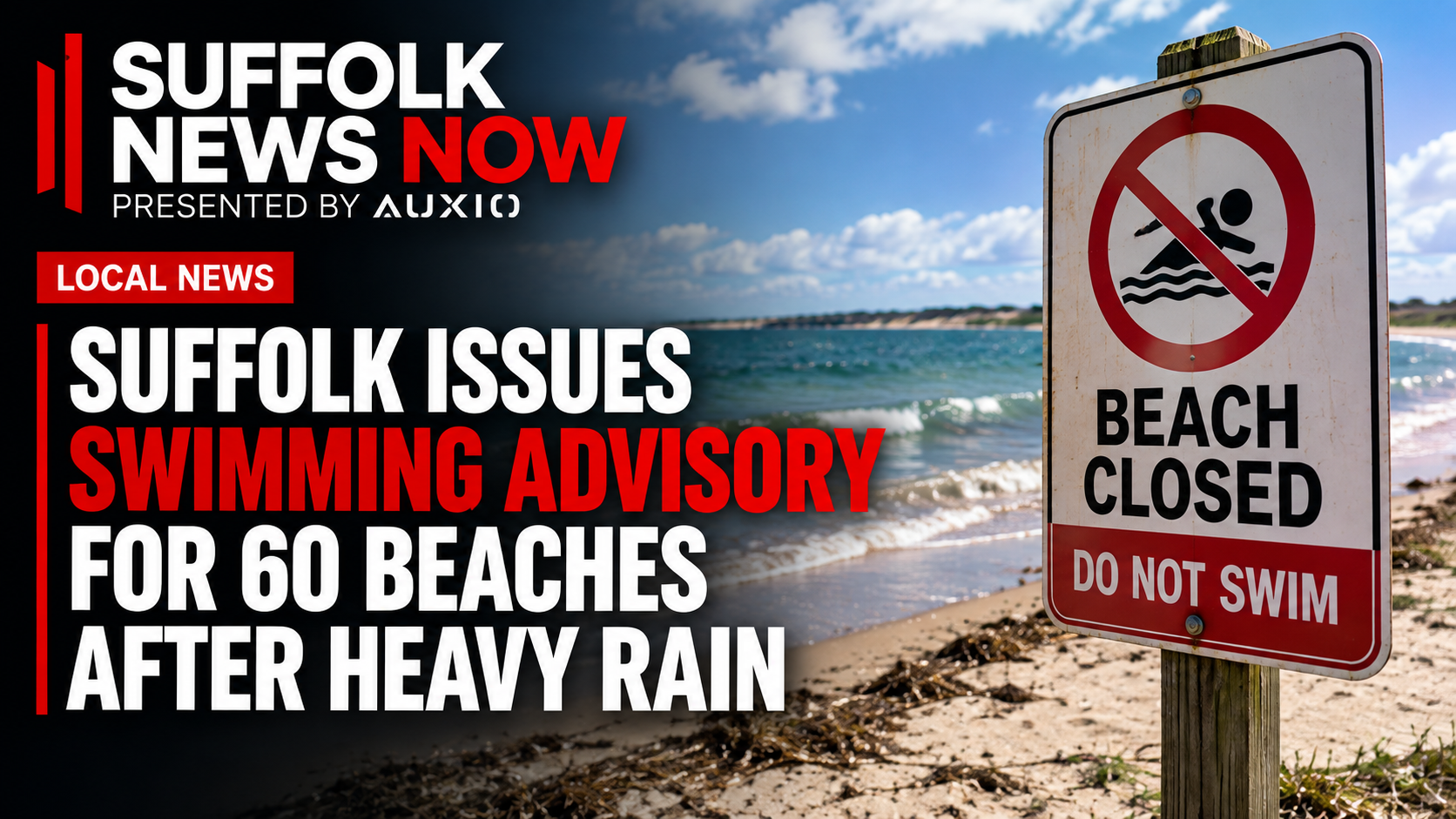
  • Suffolk Issues Swimming Advisory for 60 Beaches After Heavy Rain

    Suffolk Issues Swimming Advisory for 60 Beaches After Heavy Rain

    SUFFOLK COUNTY — The Suffolk County Department of Health Services has issued a bathing advisory for 60 beaches following heavy rainfall, warning that stormwater runoff may temporarily push bacteria levels above New York State standards.

    The Sept. 1 advisory covers beaches across multiple parts of the county, including areas around Cold Spring Harbor, Huntington Harbor and Bay, Centerport Harbor, Northport Harbor and Bay, the Port Jefferson Harbor complex, Stony Brook Harbor, the northern shoreline of the Great South Bay, Sag Harbor and several Long Island Sound beaches affected by nearby stormwater discharges. 

    County health officials say the affected beaches are in areas heavily influenced by runoff from surrounding watersheds and tributaries. Many are also located in enclosed embayments where limited tidal flushing can allow elevated bacteria levels to persist longer after storms. 

    Residents Urged to Avoid Water Contact

    The county recommends suspending swimming and other water contact in affected areas until the water has been flushed by two successive tidal cycles — at least 24 hours after rainfall ends. 

    The rainfall-related advisory was expected to be lifted Thursday, Sept. 3 at 7 a.m., provided conditions improved as expected. 

    Separately, three beaches remained closed because of high bacteria levels:

    • Huntington Beach Community Association
    • Valley Grove Beach in Eatons Neck
    • Tides Beach in Rocky Point 

    Beaches Across Suffolk Affected

    The advisory spans several towns, including Babylon, Brookhaven, Huntington, Islip and Smithtown, as well as Havens Beach in Sag Harbor.

    Among the listed beaches are Tanner Park in Copiague, Corey Beach in Blue Point, Stony Brook Beach, Centerport Beach, Crab Meadow Beach in Northport, West Islip Beach, Bayport Beach, Sayville Marina Park Beach and Long Beach in Nissequogue. 

    Health officials also cautioned residents that the same guidance should be considered for other surface waters affected by stormwater runoff, even if those locations are not officially designated bathing beaches. 

    The county specifically urges people with open wounds, recent tattoos or recent surgery to avoid contact with saltwater and brackish waters such as bays, inlets and river mouths. 

    Residents can check current beach conditions through Suffolk County’s bathing beach program or call the county’s beach hotline at 631-852-5822. 
  • Two More Rabid Raccoons Found in Islip as Suffolk Warns Residents

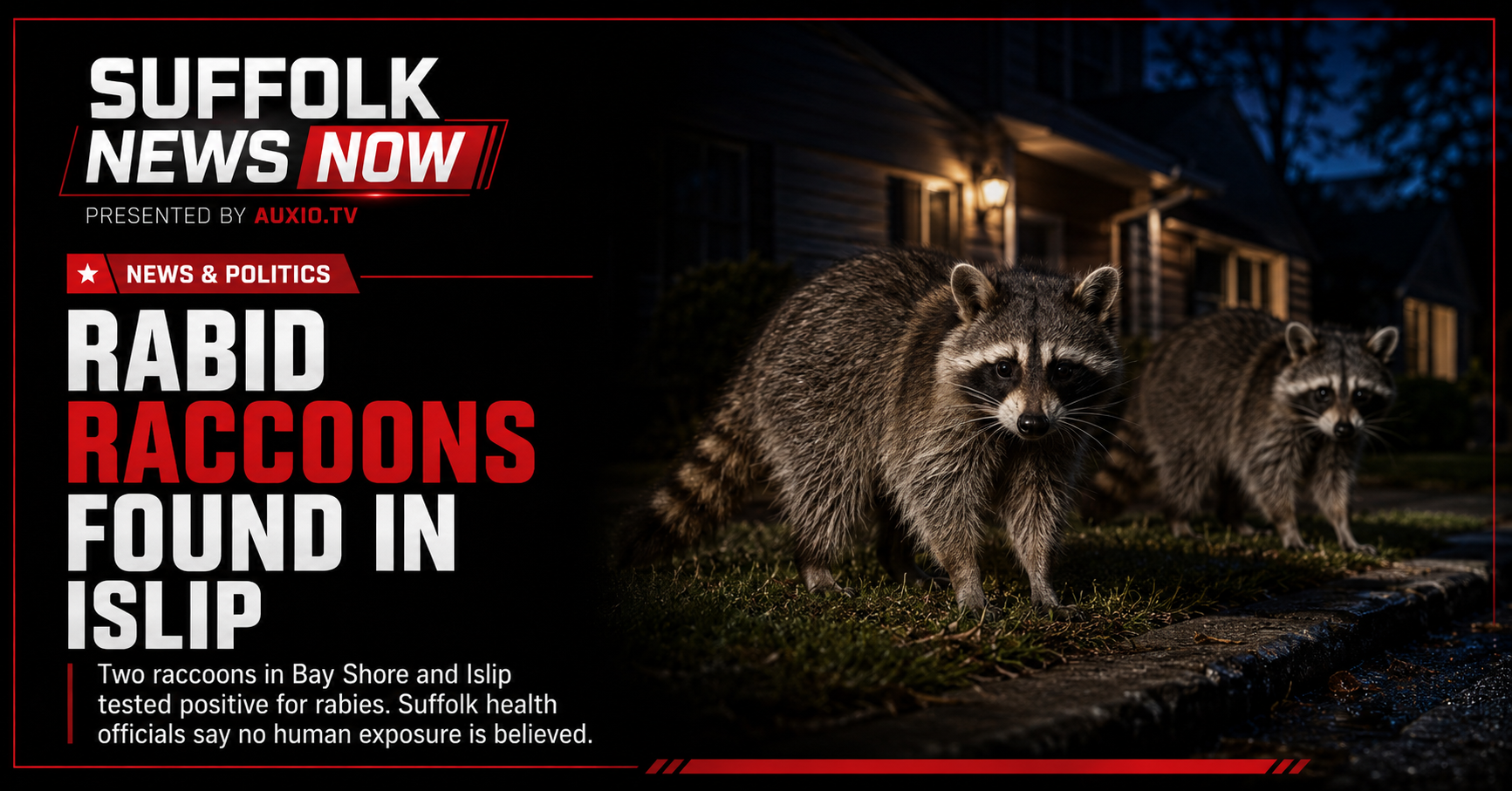
    Two More Rabid Raccoons Found in Islip as Suffolk Warns Residents

    ISLIP, N.Y. — Suffolk County health officials are warning residents to avoid contact with wild animals after two additional raccoons found in the Town of Islip tested positive for rabies.

    The Suffolk County Department of Health Services said one raccoon was found dead on a street in Bay Shore and another was found dead in Islip earlier in August. The animals were retrieved by the Islip Animal Shelter and submitted for rabies testing.

    The county said the Wadsworth Center at the New York State Department of Health confirmed the positive results on Aug. 19. At the time of the announcement, county health officials said they did not believe there had been any human exposure. 

    The two cases were identified as Suffolk County’s 38th and 39th positive terrestrial rabies confirmations since Feb. 7, 2025, according to the county. 

    They followed another confirmed case in Islip earlier in August. In that case, a member of the public reported a raccoon that appeared ill. Suffolk County Police Emergency Service officers responded, and testing later confirmed rabies. County officials reported no human or pet exposure in that incident. 

    The latest cases are part of a broader return of terrestrial rabies to Suffolk County after years without locally acquired cases. Suffolk reported its first locally acquired terrestrial rabies case of 2026 in January, when a dead raccoon found in Wyandanch tested positive. At that point, officials said nearly all of the county’s recent terrestrial cases involved raccoons. 

    Rabies is a viral disease that attacks the central nervous system and can infect mammals, including raccoons, bats, skunks and foxes. Human infection most commonly occurs when saliva or nervous tissue from an infected animal enters the body through a bite, scratch or open wound. 

    Suffolk County is urging residents not to touch or transport wild animals. Anyone who sees a raccoon behaving abnormally can contact Suffolk County Police at 631-852-COPS or the New York State Department of Environmental Conservation at 631-444-0250. 

    Residents should also keep pets’ rabies vaccinations current and report possible animal bites or wildlife exposures to county health officials.

    Why It Matters

    The new Islip cases show that Suffolk County’s terrestrial rabies activity has not disappeared. Residents who encounter sick, unusually aggressive, disoriented or dead wildlife should avoid direct contact and allow animal-control or public-health professionals to handle the animal.