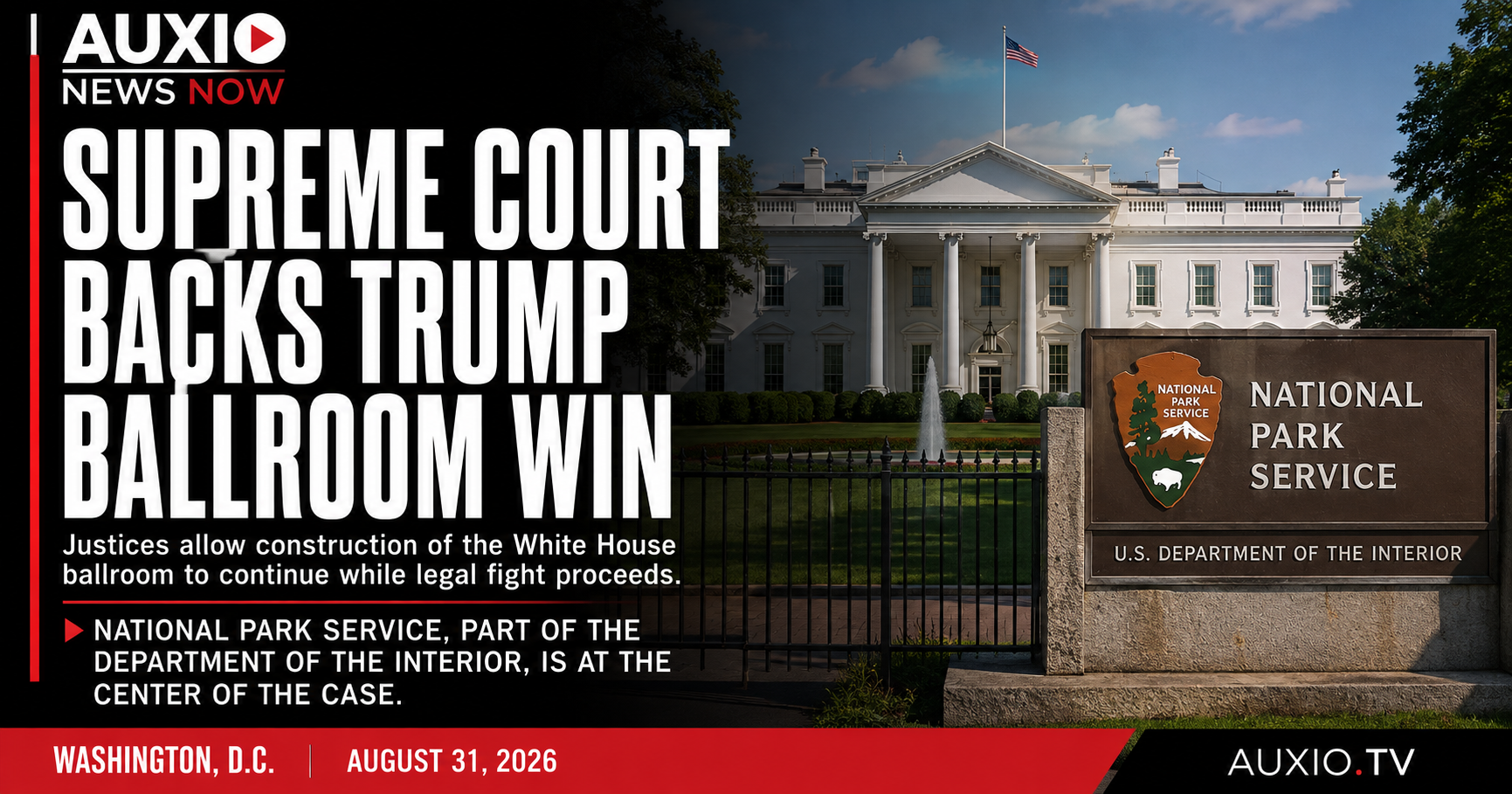
WASHINGTON — The U.S. Supreme Court has cleared the way for construction of President Donald Trump’s White House ballroom project to continue, granting the administration’s request to stay a lower-court injunction while the broader legal fight proceeds.
The Aug. 31 order came in National Park Service, et al. v. National Trust for Historic Preservation in the United States, placing the National Park Service — an agency within the Department of the Interior — directly at the center of the case.
The Court stayed an injunction issued by the U.S. District Court for the District of Columbia that had restricted portions of the East Wing project. The stay remains in effect while the government seeks Supreme Court review of the case.
The administration’s application was filed by the Solicitor General on behalf of the National Park Service and other federal applicants. The government argued that the lower-court order threatened to interrupt an integrated White House construction project and create security and operational consequences.
The Department of the Interior’s role runs through the National Park Service, which manages President’s Park, including the White House grounds.
NPS prepared the federal environmental assessment for the White House East Wing Modernization and State Ballroom project. According to the agency’s planning record, the selected action calls for replacing the existing East Wing with a new building that will house the White House State Ballroom and associated facilities.
The agency also completed a Finding of No Significant Impact, concluding that the selected project would not significantly impair park resources under the standards used by the National Park Service.
That makes Interior’s role more than administrative background. One of its agencies conducted the project review, manages the federal park property involved and is the lead named federal applicant before the Supreme Court.
What the Supreme Court Decided
The Court’s order is a significant procedural victory for the administration, but it does not constitute a final ruling that the ballroom project is lawful.
The stay allows construction to continue while the litigation proceeds.
Chief Justice John Roberts dissented, joined by Justices Sonia Sotomayor, Elena Kagan and Ketanji Brown Jackson.
Roberts argued that the construction is likely unlawful because federal law generally prohibits construction of a new building or structure on federal park grounds in Washington without express congressional authorization. He noted that the project sits within President’s Park.
That dispute remains unresolved.
Why It Matters
The case now involves more than a White House renovation.
It raises questions about presidential authority over federal property, Congress’ role in authorizing construction in Washington and the extent to which Interior Department agencies can approve and manage major changes to historic federal property.
For the Trump administration, however, the immediate result is straightforward: the lower-court restriction has been stayed, and construction can continue while the case moves forward.
