
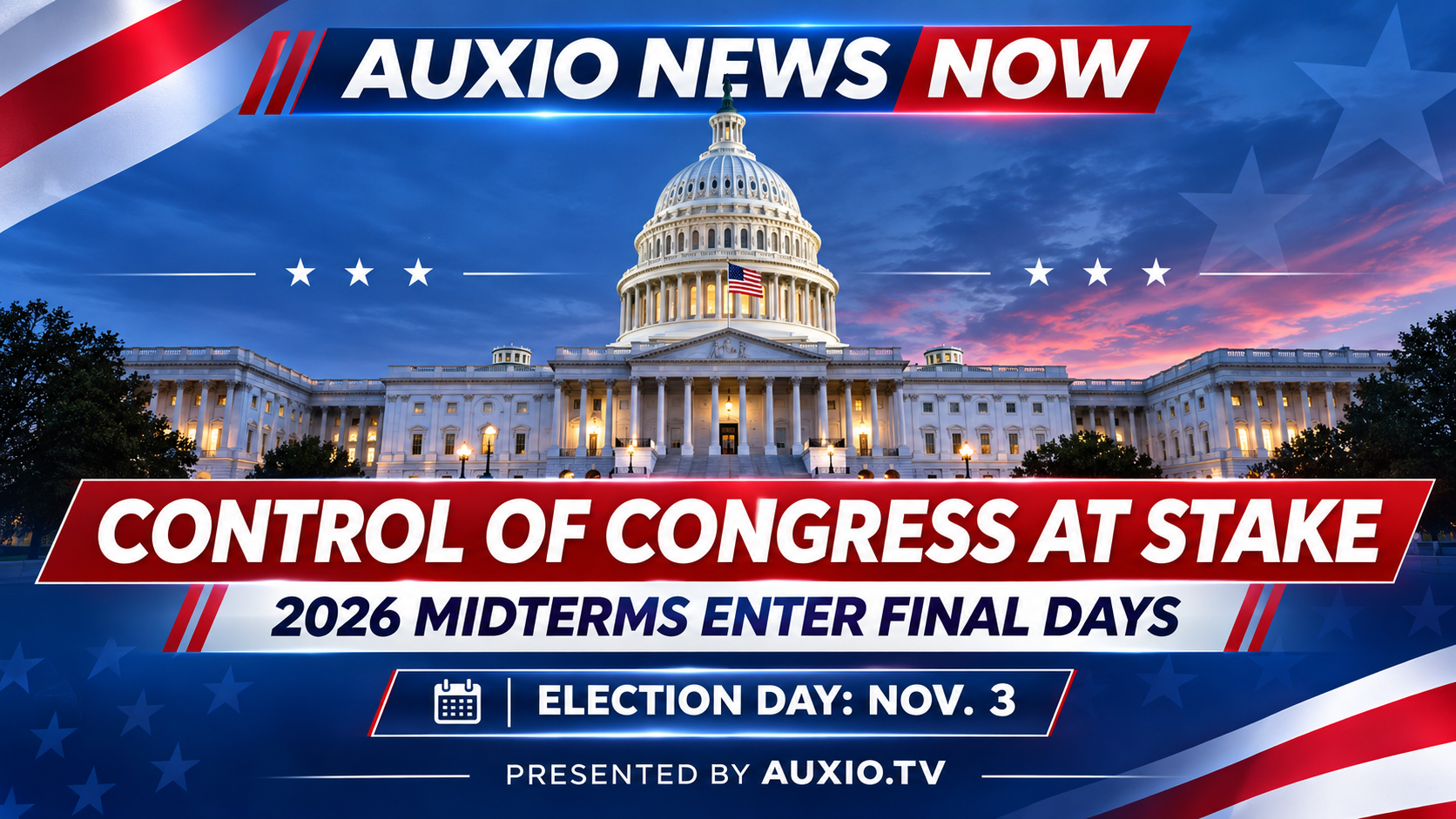
Voters will decide hundreds of congressional races and dozens of governorships in an election that could reshape Washington’s political balance.
WASHINGTON, D.C. — November 1, 2026 — The 2026 midterm elections are entering their final stretch, with control of the U.S. House of Representatives and Senate at stake as President Donald Trump and congressional leaders prepare for the possibility of a significantly different political landscape.
The November 3 general election will determine all 435 seats in the House of Representatives and 35 U.S. Senate seats, including regularly scheduled contests and special elections.
Republicans currently hold majorities in both chambers, giving the party control of Congress during the first two years of Trump’s second administration.
Democrats are seeking to gain enough seats to capture one or both chambers, while Republicans are working to retain their majorities and preserve their ability to advance the administration’s legislative priorities.
House and Senate Control on the Line
Every House seat is on the ballot, placing the chamber’s narrow partisan balance at the center of the national contest.
A change in House control would affect congressional leadership, legislative negotiations, committee oversight, and the administration’s ability to move legislation through Congress.
The Senate presents a different challenge. With only a portion of its seats contested, the outcome will depend on a smaller number of individual races across the country.
Republicans enter the election defending their Senate majority, while Democrats are attempting to build a path toward control through competitive contests in multiple states.
Governors’ Races Add to National Stakes
Beyond Congress, voters in 36 states will select governors.
Those elections will determine leadership over state budgets, executive agencies, and major policy decisions involving education, infrastructure, public safety, and economic development.
The results could also influence how individual states approach federal policies during the remainder of Trump’s presidency.
Economy and Government Accountability Remain Central
The closing days of the campaign have placed renewed attention on household costs, economic conditions, immigration, federal spending, and the relationship between Washington and state governments.
Republicans have emphasized the administration’s economic and policy agenda, while Democratic candidates have challenged its record and argued for greater congressional oversight.
The election also arrives during a period of intense debate over political leadership, federal authority, and the direction of national policy.
A Defining Election for Washington
Although Trump is not on the ballot, the composition of Congress will have substantial consequences for his administration.
A Republican-controlled House and Senate would allow the president to continue working with majorities from his own party.
A Democratic majority in either chamber would alter the legislative environment and could bring additional oversight, investigations, and negotiations over spending and policy.
The final results will determine the partisan balance of the 120th Congress, which convenes in January 2027.
With Election Day approaching, the central question is whether Republicans will retain control of Washington’s legislative branch or whether voters will produce a divided federal government.
AUXIO News Now will continue following the national congressional and gubernatorial contests as results emerge.