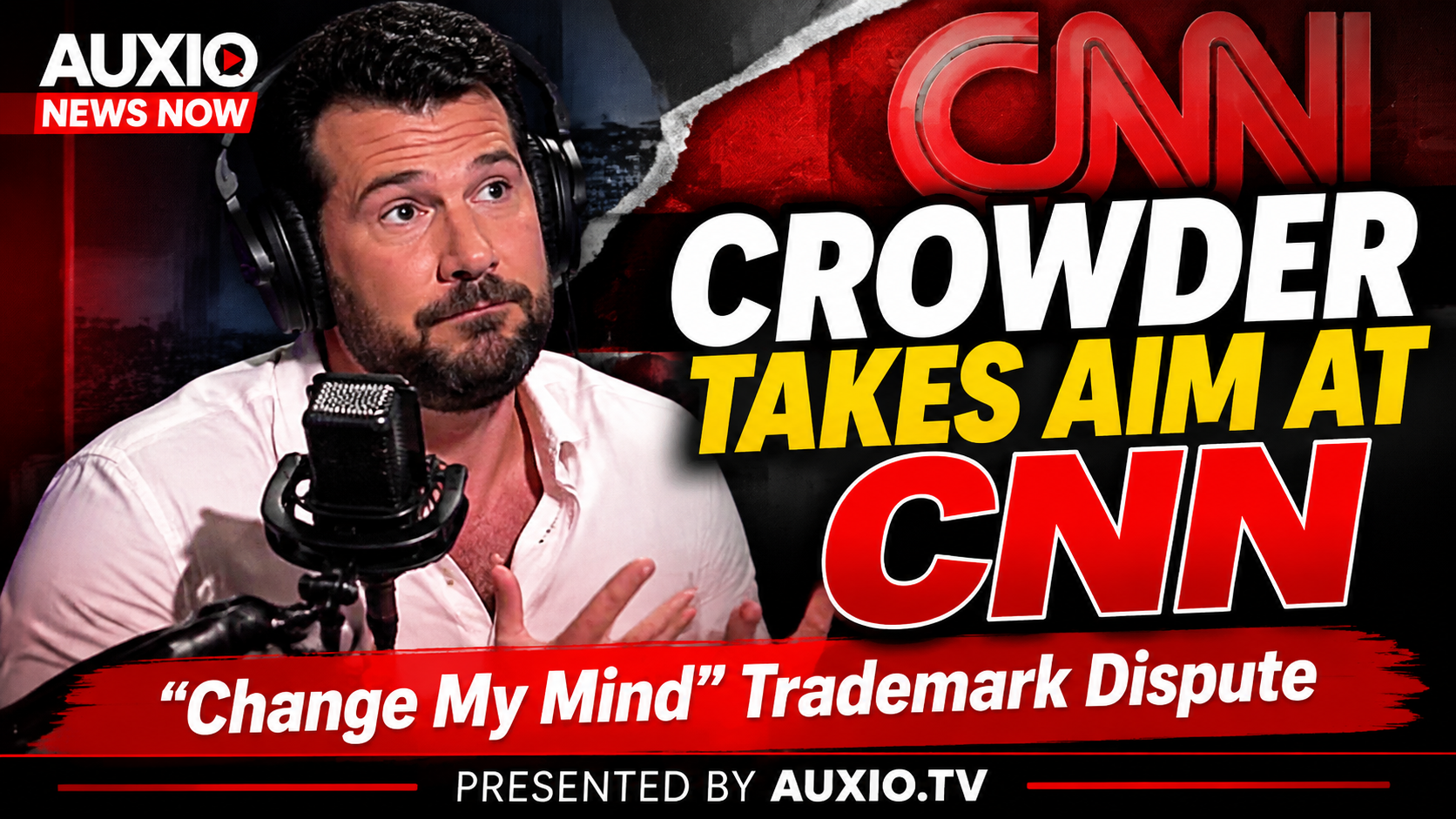
WASHINGTON, D.C. — Conservative commentator Steven Crowder says he intends to pursue legal action against CNN, Jubilee Media and Texas Democratic U.S. Senate candidate James Talarico, accusing them of using his registered “Change My Mind” trademark during a nationally televised political town hall.
The dispute emerged following CNN and Jubilee’s October 14 event in Fort Worth, Texas, where Talarico answered questions from voters during a program moderated by CNN anchor Erin Burnett.
The broadcast included a segment identified as “Change My Mind,” a phrase Crowder has used for years in his popular political debate series.
Crowder responded publicly on October 15, declaring that he planned to sue all three parties.
A Registered Trademark at the Center of the Dispute
Crowder’s “Change My Mind” series became widely recognized through videos featuring the commentator seated at a table, inviting students and other participants to challenge his views on political and cultural issues.
The format also produced a widely circulated internet meme.
But Crowder’s objection goes beyond similarities between the two programs.
Federal trademark records show that “CHANGE MY MIND” is a registered trademark owned by LWC IP Assets LLC.
The trademark, registration number 5960565, was registered January 14, 2020, for entertainment-related services. Its listed first use in commerce dates to December 2017.
The registration provides a documented basis for Crowder’s intellectual-property complaint, although it does not automatically establish that CNN or its partners committed trademark infringement.
Crowder Accuses Larger Media Companies of Taking His Concept
Following the CNN broadcast, Crowder posted a statement identifying CNN, Jubilee and Talarico as the targets of his intended legal action.
“Change My Mind is a registered trademark,” he wrote.
Crowder also claimed that cable television executives had previously rejected his pitch for the concept before he independently developed it into an established program.
He argues that larger media organizations are now benefiting from a recognizable brand he spent years building.
The allegations raise questions about intellectual-property ownership in an increasingly competitive media environment, where independent digital creators frequently develop programming concepts that later resemble productions from major television networks.
CNN’s Broadcast Used the Same Phrase
CNN’s own October 14 programming referred to a segment called “Change My Mind,” confirming that the disputed wording appeared in connection with its coverage of Talarico.
CNN and Jubilee had announced their partnership in September, describing a town hall featuring direct interaction between the Senate candidate and voters.
The event was part of CNN’s coverage of the closely watched Texas Senate race.
Crowder contends that the use of his show’s name in a comparable political-discussion setting could improperly capitalize on an established media brand.
Whether that use amounts to infringement would depend on the specific presentation, the scope of the trademark and the likelihood that viewers could mistakenly associate CNN’s segment with Crowder.
Does Crowder Have a Legal Case?
Trademark law generally protects names and symbols that identify the source of particular goods or services.
However, ownership of a registered trademark does not give someone exclusive control over every ordinary use of the words involved.
A legal challenge would likely examine whether CNN and Jubilee used “Change My Mind” as a program identifier, whether their presentation created a likelihood of consumer confusion and what defenses might apply.
The distinction between a protected brand and a general discussion format could become central to the dispute.
Crowder’s registration is verifiable. His allegation that the defendants unlawfully used the trademark remains unproven.
Legal Filing Not Yet Confirmed
As of October 17, Crowder has publicly announced his intention to sue, but a filed lawsuit against CNN, Jubilee and Talarico has not been independently confirmed.
No court ruling establishing trademark infringement has been identified.
The dispute nevertheless highlights a growing question in the media industry: How much protection does an independent creator’s established brand receive when larger organizations adopt similar names or presentation styles?
For Crowder, the controversy centers on ownership and recognition of a brand he developed over several years.
For CNN and Jubilee, any future legal dispute could require examining how their televised segment was named, presented and distinguished from Crowder’s existing program.
Whether the disagreement ultimately reaches a courtroom remains to be seen.