Tag: Congress

  • Trump Administration Moves to Cancel More Than $800 Million in Approved Federal Spending

    Trump Administration Moves to Cancel More Than $800 Million in Approved Federal Spending

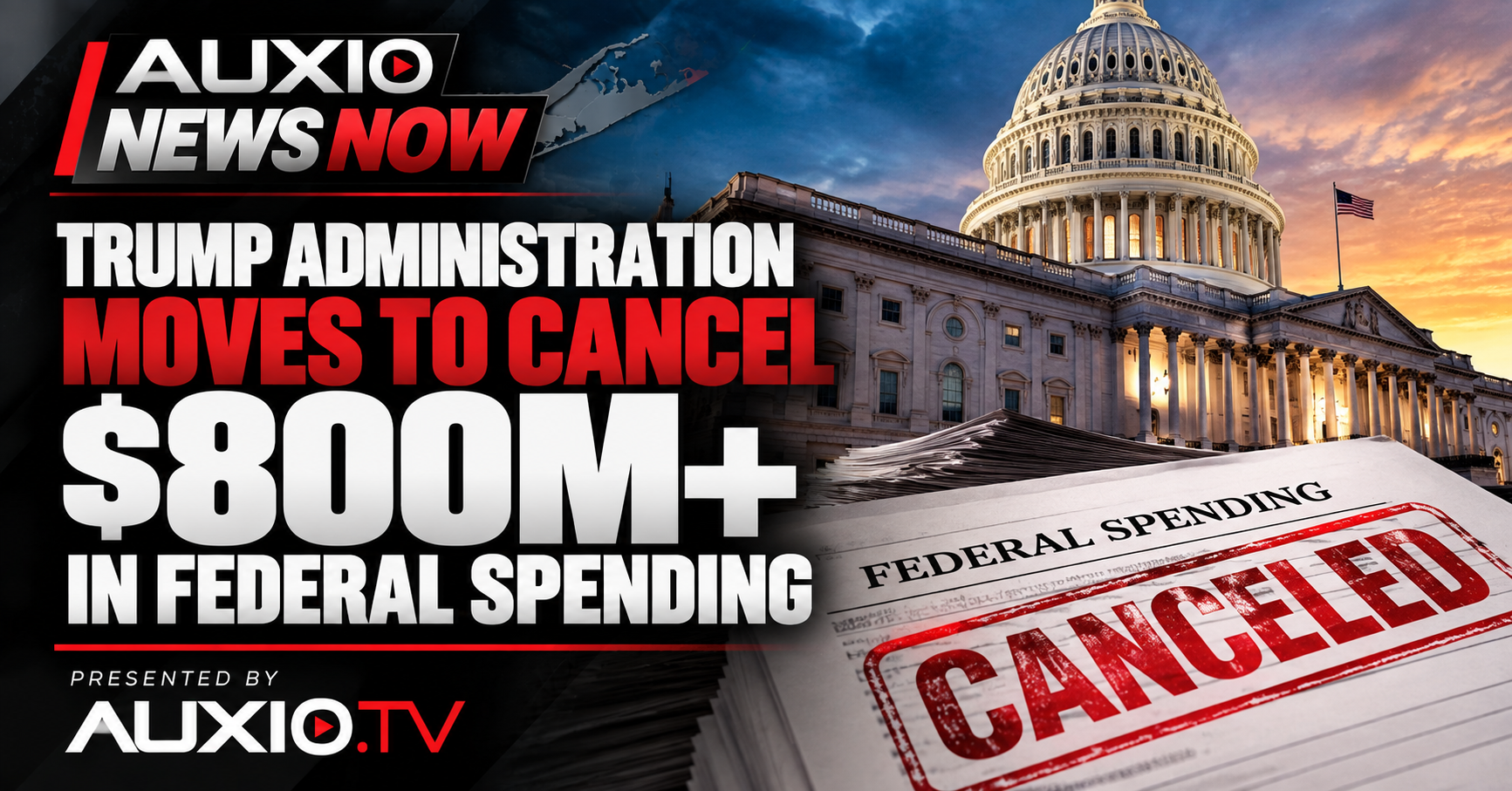
    WASHINGTON — President Donald Trump’s administration has moved to cancel more than $800 million in federal spending previously approved by Congress, reopening a dispute over presidential authority to withhold appropriated funds.

    The White House said the action uses a rarely invoked mechanism known as a “pocket rescission” under the Impoundment Control Act. The administration says the targeted funding includes programs involving services for non-citizens, education and diversity-related initiatives. 

    The White House characterized the spending as wasteful and said the move is intended to protect taxpayers. 

    The action is already facing opposition on Capitol Hill. Sen. Susan Collins of Maine, the Republican chair of the Senate Appropriations Committee, has said the administration’s use of the maneuver violates federal spending law. Other lawmakers and legal experts have also questioned whether a president can effectively allow congressionally approved funding to expire without giving Congress sufficient time to act on a rescission request. 

    The dispute adds another chapter to the broader fight between the executive branch and Congress over control of federal spending.

  • Massie, Burlison Introduce ‘Flock-Off Act’ Targeting Federal Funding for License-Plate Surveillance

    Massie, Burlison Introduce ‘Flock-Off Act’ Targeting Federal Funding for License-Plate Surveillance

    WASHINGTON — A bipartisan group of House lawmakers has introduced legislation that would sharply restrict the use of federal money for automated license-plate readers and biometric surveillance camera systems used by government agencies across the country.

    The bill, formally titled the Flock-Off Act, was introduced Sept. 2 by Rep. Thomas Massie, R-Ky., with Rep. Eric Burlison, R-Mo., as a co-lead. It is designated H.R. 10221 and has been referred to the House Committee on Oversight and Government Reform. 

    The legislation would prohibit federal funds from being used to purchase, install, maintain, operate, repair, replace or upgrade covered automated license-plate reader systems and biometric surveillance cameras.

    That prohibition would also extend beyond the physical cameras themselves.

    According to Massie’s office, federal funds could not be used for associated contracts, subscriptions, cloud services, databases or data-sharing arrangements tied to those systems. The proposal also covers AI-enhanced license-plate readers and biometric systems capable of using facial recognition, voiceprints, iris or retinal scans, fingerprints and gait recognition. 

    180-Day Deadline

    One of the bill’s most consequential provisions is a 180-day compliance deadline.

    Federal agencies would be required to remove covered systems that had been purchased or operated with federal money. State and local governments receiving federal program funds would be required to stop operating covered systems within 180 days as a condition of continuing to receive funding under the affected federal program. 

    The legislation also provides a financial enforcement mechanism.

    Recipients found to have used federal money in violation of the restrictions could have program funds withheld until the improperly spent money is repaid to the U.S. Treasury. 

    Massie said the proposal is aimed at preventing federal taxpayers from financing surveillance systems that he believes can be used to monitor people who are not suspected of crimes.

    “The federal government shouldn’t provide ‘security’ grants to cities and police departments that have gone beyond the pale and turned their communities into a version of 1984,” Massie said in announcing the bill. 

    Burlison framed the legislation around Fourth Amendment protections, arguing that advances in surveillance technology should not come at the expense of privacy and constitutional rights. 

    Flock Safety Has Built a Large National Network

    Although the bill is written broadly enough to cover qualifying surveillance systems from multiple vendors, its name is an unmistakable reference to Flock Safety, one of the largest providers of automated license-plate reader technology in the United States.

    Flock says its technology is used by more than 5,000 law-enforcement agencies, 6,000 communities and 1,000 businesses. The company also says its agency-controlled license-plate reader network connects agencies in 49 states. 

    Flock describes its license-plate readers as investigative tools designed to identify vehicles connected to crimes, missing persons and other public-safety cases.

    According to the company, agencies can receive alerts when vehicles match customer-defined or National Crime Information Center hot lists, search partial or temporary license plates and share information with participating agencies across jurisdictions. 

    The company says its platform includes audit logs, local agency control over data and privacy and compliance safeguards.

    Flock also states that facial recognition is not included and is not planned as part of its license-plate reader product. 

    The company has separately acknowledged that public concerns have emerged around access and data sharing. In published material discussing state laws governing license-plate readers, Flock says it has implemented filters and other controls intended to comply with restrictions involving immigration enforcement, reproductive-health investigations and other state-specific requirements. 

    Bill Includes Limited Exceptions

    The Flock-Off Act would not eliminate every federally supported use of automated license-plate technology.

    The legislation specifically allows federal funding for ALPR systems used solely for collecting, administering or enforcing tolls. 

    It also creates an exception for certain surveillance cameras located within one mile of the northern or southern U.S. border when they are used for detecting or intercepting unlawful entry, human trafficking or drug smuggling. 

    Those exceptions underscore that the proposal is primarily aimed at broader domestic surveillance networks rather than eliminating every government use of camera technology.

    Unusual Bipartisan Coalition

    The bill has attracted an unusual mix of lawmakers.

    Massie introduced H.R. 10221 alongside Burlison and original cosponsors Reps. Ro Khanna, D-Calif.; Victoria Spartz, R-Ind.; Paul Gosar, R-Ariz.; Chip Roy, R-Texas; and Lauren Boebert, R-Colo. 

    Khanna is the lone Democrat among the original sponsors listed in the bill.

    That coalition reflects how concerns over government surveillance can cut across conventional party lines, even when lawmakers disagree on many other issues.

    What Happens Next

    The Flock-Off Act is currently only an introduced bill. It has not been approved by the House, passed by the Senate or signed into law.

    Its next legislative step would come through the House Committee on Oversight and Government Reform, which can consider the measure, amend it, hold hearings or decide whether to advance it toward a House vote. 

    For now, the legislation places a growing national debate over automated license-plate readers squarely before Congress: whether the federal government should continue helping state and local agencies pay for technology capable of tracking vehicle movements across increasingly interconnected networks.
  • LaLota Says He Has Personally Responded to More Than 73,000 Constituent Letters Since Taking Office

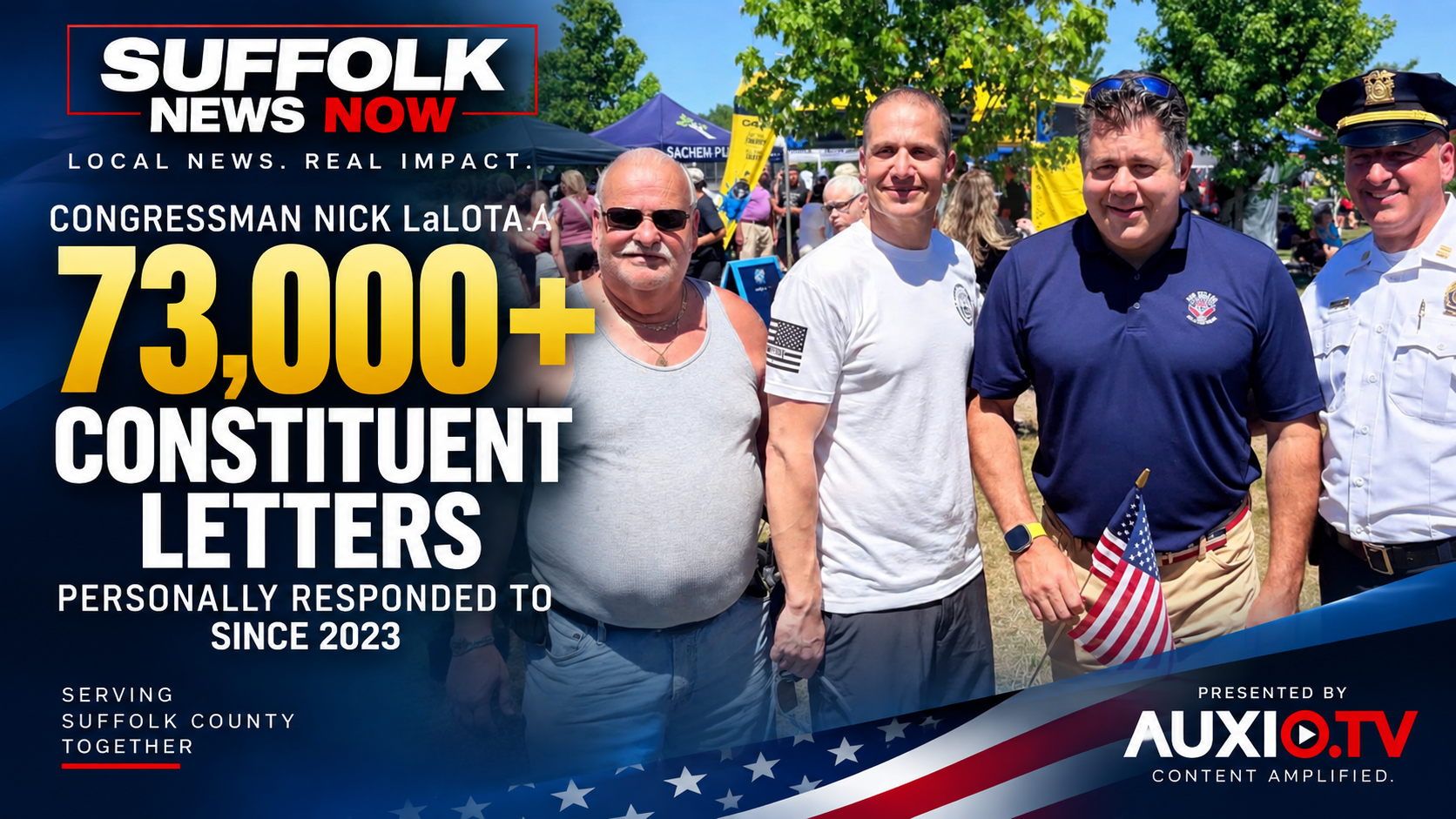
    LaLota Says He Has Personally Responded to More Than 73,000 Constituent Letters Since Taking Office

    SUFFOLK COUNTY, N.Y. — Congressman Nick LaLota says he has personally responded to more than 73,000 letters from constituents since taking office in 2023, pointing to the volume of correspondence as a measure of his office’s engagement with residents across Suffolk County.

    In a public statement posted Wednesday, LaLota said the letters have covered a wide range of issues, including taxes, immigration, healthcare and public safety.

    “Hearing from Long Islanders directly is part of the job,” LaLota wrote, adding that he takes constituent correspondence seriously “whether or not we agree.”

    LaLota has represented New York’s 1st Congressional District since being sworn into office in January 2023. His district includes much of Suffolk County, and his congressional office maintains constituent-service operations in Hauppauge. 

    The 73,000-letter figure fits into a broader constituent-service message LaLota has emphasized throughout his time in Congress.

    In June, his office announced that it had recovered more than $15.6 million for Suffolk County residents through casework involving federal agencies. According to LaLota’s office, those cases included matters involving the IRS, Social Security Administration, Department of Veterans Affairs, FEMA, Medicare and other federal programs. 

    The Hauppauge district office also assists residents with Social Security, Medicare, veterans’ benefits, passports, visas, tax matters and small-business issues involving federal agencies. 

    LaLota has also recently highlighted federal funding secured for local public-safety agencies. In August, he presented nearly $1 million in federal funding to the Southampton Town Police Department and Sag Harbor Village Police Department for technology and vehicle improvements. 

    The new letter-response figure offers another snapshot of the scale of constituent interaction handled by the congressional office since 2023.

    For residents, LaLota’s message is straightforward: contacting a congressional office is not limited to political opinions or legislation. Constituents can also seek assistance with federal agencies, benefits, taxes, veterans’ matters and other government services.

  • Don Davis Burned Through Tens of Thousands in Taxpayer-Funded Office Spending

    Don Davis Burned Through Tens of Thousands in Taxpayer-Funded Office Spending

    WASHINGTON — Rep. Don Davis’ first year in Congress came with a hefty taxpayer-funded office bill.

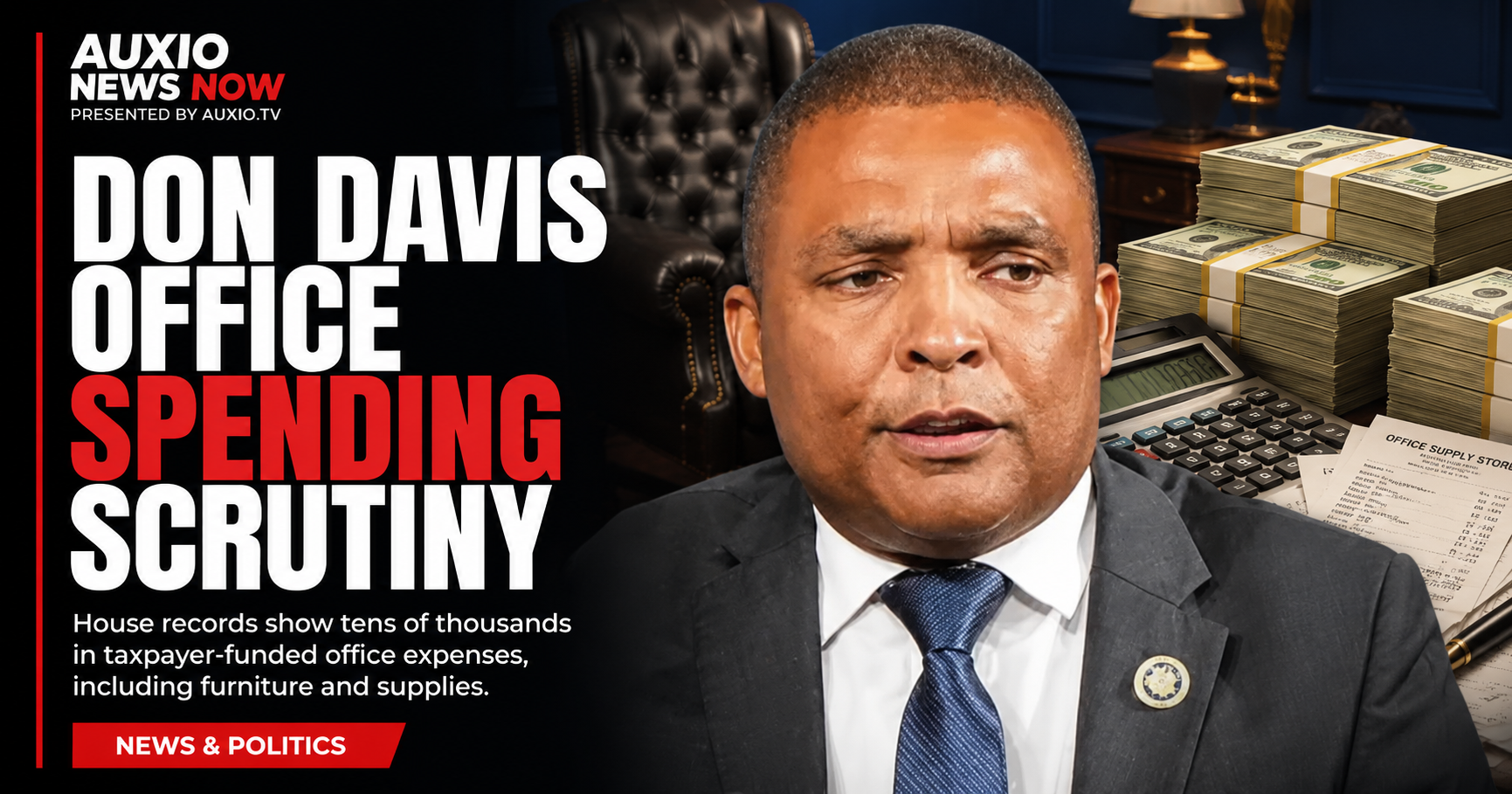
    Official House spending records show the North Carolina Democrat reported tens of thousands of dollars in office-related expenses in 2023, including substantial purchases categorized as habitation expenses, office supplies and furniture.

    The spending is drawing renewed scrutiny as Davis seeks to hold onto one of the most competitive congressional seats in the country.

    House records show that in the second quarter of 2023 alone, Davis’ office reported multiple large transactions with Taff Office, including $11,772.35 and $10,202 in “habitation expenses,” along with additional office-supply and furniture purchases. 

    The same disclosure shows furniture and fixture purchases of $3,588, $1,313 and $1,979, plus thousands more in office supplies. 

    The House defines a “habitation expense” as a category covering minor office decoration and lower-cost furniture items such as chairs and tables under $500. More expensive furniture is separately reported under furniture and fixtures. 

    That distinction matters because Davis’ records show spending in both categories, meaning the total office-related bill extended beyond small decorative purchases.

    The money came from Davis’ Members’ Representational Allowance, the taxpayer-funded budget each House member receives to operate congressional offices and perform official duties. The House says the allowance is intended to cover expenses such as equipment, supplies, subscriptions, technology and other official office costs. 

    Davis currently maintains offices in Washington, Elizabeth City, Rocky Mount and Goldsboro. 

    His office has defended the spending as part of the cost of establishing a new congressional operation and equipping multiple district offices.

    But the size of the purchases raises an obvious taxpayer question: how much office furnishing is reasonable for a first-term member of Congress?

    The issue is not whether members are legally permitted to furnish their offices. They are.

    The issue is whether spending tens of thousands of taxpayer dollars on furniture, decoration and supplies reflects the kind of fiscal restraint voters are entitled to expect from elected officials.

    For Davis, the optics are particularly difficult because the records do not describe a handful of incidental office purchases. They show multiple five-figure and four-figure transactions concentrated in the early months of his congressional tenure.

    The House disclosure system exists precisely so the public can scrutinize expenditures like these.

    And as Davis faces another high-profile election in North Carolina’s 1st Congressional District, those receipts provide opponents — and taxpayers — with a concrete record to examine.

    The Bottom Line

    Davis may argue the expenditures were necessary to establish congressional offices.

    But taxpayers can reasonably ask why setting up those offices required such a large bill for furnishings, supplies and expenses classified by the House as office “habitation.”

    The records themselves do not establish wrongdoing.

    They do, however, establish something much simpler:

    Congressman Don Davis spent a lot of taxpayer money outfitting his offices.

    And voters are entitled to decide whether they think they got their money’s worth.

  • Supreme Court Allows White House Ballroom Construction to Continue

    Supreme Court Allows White House Ballroom Construction to Continue

    WASHINGTON — The U.S. Supreme Court on Monday allowed construction of the Trump administration’s White House ballroom project to continue, lifting a lower-court order that had halted portions of the work.

    The case, National Park Service v. National Trust for Historic Preservation in the United States, centers on the administration’s redevelopment of the White House East Wing. The project includes a new above-ground ballroom and a below-ground military installation. 

    The National Trust for Historic Preservation sued to stop the project, arguing that the administration lacked the congressional authorization required for new construction on federal grounds in Washington.

    A federal district judge previously agreed that the organization was likely to succeed on the merits and issued a preliminary injunction blocking construction until Congress authorized the project. 

    The Supreme Court’s Aug. 31 order effectively removes that obstacle for now. The majority concluded that the preservation group had not shown the type of concrete and particularized injury necessary to establish legal standing.

    The ruling does not amount to a final determination that the ballroom itself is lawful. Instead, it allows construction to proceed while resolving the immediate dispute over whether the National Trust could maintain its challenge. 

    Chief Justice John Roberts dissented, joined by Justices Sonia Sotomayor, Elena Kagan and Ketanji Brown Jackson. Roberts wrote that the construction was “likely unlawful,” pointing to federal law barring construction of buildings or structures on federal public grounds in Washington without express congressional authority. 

    The government has defended the project in part on national-security grounds, describing it in Supreme Court filings as an integrated complex that includes secure facilities in addition to the ballroom. 

    The dispute has become about more than architecture. It raises broader questions about presidential authority over the White House complex, Congress’s control over federal property and who has standing to challenge major alterations to historically significant government sites.

    For now, the practical result is clear: construction can continue.

  • House Republicans Revive Socialism Showdown Ahead of Midterms

    House Republicans Revive Socialism Showdown Ahead of Midterms

    By Auxio.tv News | August 28, 2026

    House Republicans are preparing another high-profile vote condemning socialism, setting up a politically charged test for lawmakers just months before the 2026 midterm elections.

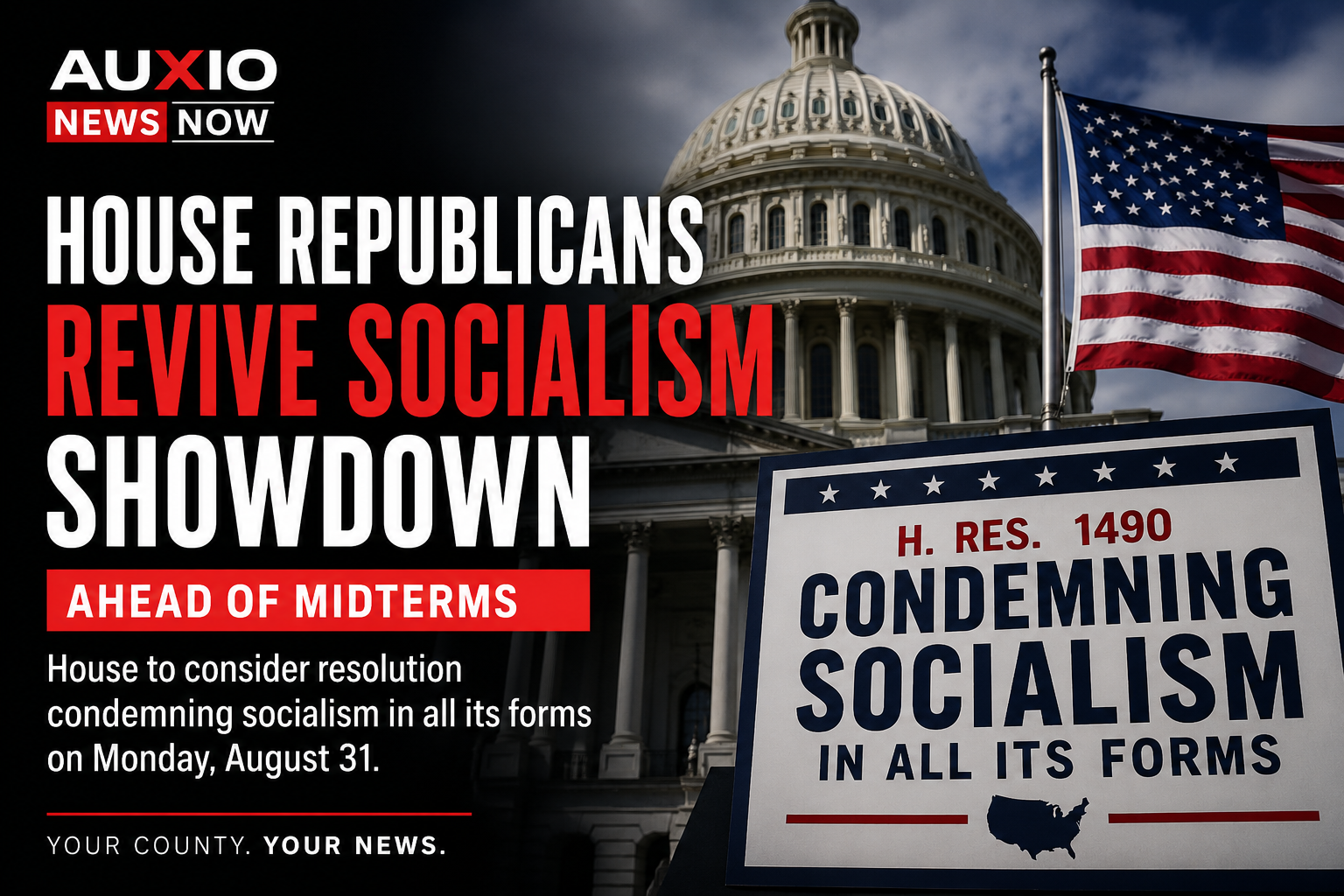
    The House Rules Committee is scheduled to consider H. Res. 1490 on Monday, August 31. The resolution, introduced by Rep. Jeff Crank of Colorado, calls for the condemnation and denouncement of socialism “in all its forms.” 

    Crank’s office says the resolution also targets the Democratic Socialists of America and argues that some of the group’s positions are incompatible with secure elections and traditional American political norms. Those are the sponsor’s political claims, not independently established facts, and they should be understood as part of the resolution’s argument. 

    The timing is not accidental.

    Congress has already voted on similar language before. In November 2025, the House passed a resolution titled “Denouncing the horrors of socialism” by a vote of 285 to 98, with two members voting present. All 199 Republicans who voted supported it, while Democrats split sharply: 86 voted yes, 98 voted no, and two voted present. 

    That history helps explain why another vote can be politically useful even though the resolution itself does not change federal law.

    A vote designed to draw a line

    Nonbinding resolutions are often dismissed because they do not alter tax policy, spending, regulations or criminal law.

    But that does not mean they have no purpose.

    A resolution like this creates a recorded vote on a broad ideological question.

    That vote can then be used in campaign advertising, fundraising, debates and constituent messaging.

    Republicans who support the measure can tell voters they formally rejected socialism.

    Democrats who vote against it may then be asked to explain why.

    That is the political leverage built into the vote.

    The issue is not simply what the resolution says.

    It is what the vote allows each side to say afterward.

    Republicans are trying to define the choice before voters do

    Crank’s resolution comes as Republicans increasingly try to frame the 2026 midterms around a broader ideological contrast between free-market capitalism and socialism.

    That strategy is straightforward.

    Rather than arguing separately about every spending proposal, tax plan, housing policy or government program, Republicans can try to place those debates under one larger label.

    If voters view “socialism” negatively, then attaching that term to Democratic policies can be politically valuable.

    The difficulty is that the word itself is used very broadly in American politics.

    Some people use it to describe state ownership of major industries.

    Others apply it to expansive social programs, public health care, rent regulation or higher taxes on wealthy households.

    Those are not necessarily the same economic system.

    So the value of the resolution may depend less on establishing a precise economic definition and more on creating a clear political dividing line.

    The real question is what lawmakers are being asked to condemn

    This is where the debate becomes more substantive.

    Condemning authoritarian socialist regimes is one thing.

    Condemning every policy that someone chooses to label socialist is another.

    A serious economic discussion has to distinguish between systems that replace private ownership and market allocation, and ordinary government interventions that exist within market economies.

    That distinction matters because nearly every modern economy combines private markets with some degree of taxation, regulation and public spending.

    The argument should therefore be about which policies produce better incentives, lower costs, greater growth and more individual freedom — not merely which side can apply the most powerful label.

    That does not make the House vote meaningless.

    It makes the vote political rather than legislative.

    What happens next

    The Rules Committee has placed H. Res. 1490 on its August 31 agenda alongside several other measures. If the House proceeds to a floor vote, members could again be forced to take a public position on socialism before voters head into the midterm campaign. 

    The likely effect will not be a new federal program or change in law.

    It will be a new set of recorded votes.

    And in an election year, recorded votes are political assets.

    That may be the most important thing to understand about the coming showdown.

    Congress is not simply debating an economic philosophy.

    It is also defining the argument voters may hear repeatedly between now and November.

    Auxio.tv News Now