Tag: environmental_impact

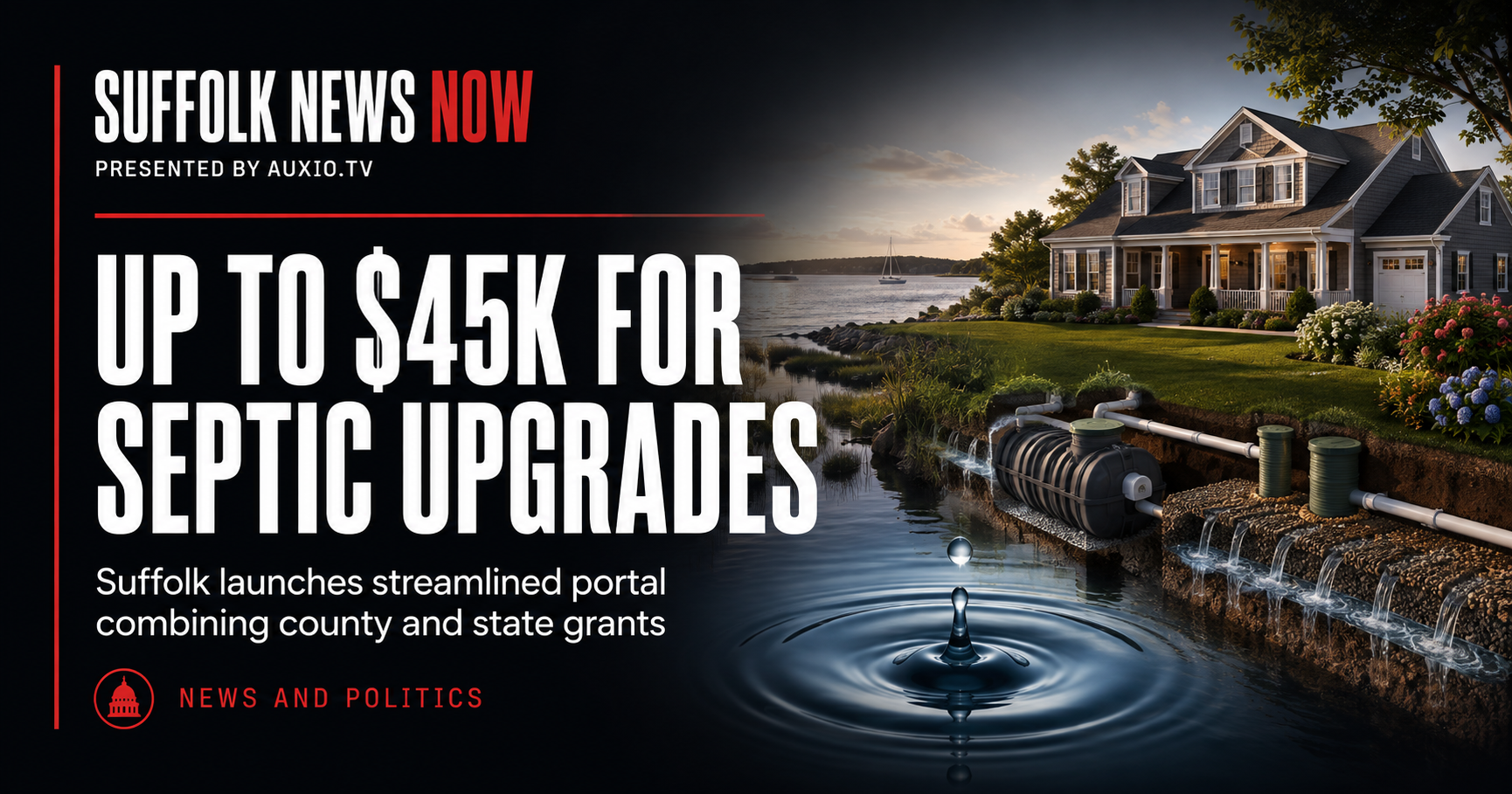
  • Suffolk Homeowners Can Apply for Up to $45,000 for Septic Upgrades

    Suffolk Homeowners Can Apply for Up to $45,000 for Septic Upgrades

    Suffolk County has launched a streamlined application portal combining county and state grant programs for homeowners replacing cesspools or conventional septic systems with nitrogen-reducing systems.

    Suffolk County homeowners may be eligible for up to $45,000 in combined county and New York State assistance to replace outdated cesspools or septic systems.

    County Executive Ed Romaine announced the new streamlined application system on Aug. 3. The portal is designed to let residents apply for both county and state septic-upgrade funding through one process.

    The county’s Septic Improvement Program can provide qualifying homeowners with up to $20,000. New York State’s Septic System Replacement Program can provide additional assistance covering up to 75% of eligible costs, capped at $25,000.

    Together, that creates a maximum potential benefit of $45,000 per qualifying property.

    Suffolk County says nearly 70% of homes rely on cesspools or septic systems. County officials argue that older systems are a major source of nitrogen pollution affecting groundwater, bays and other local waterways.

    The county portion of the program is funded through the voter-approved one-eighth-cent sales tax dedicated to water-quality improvements.

    The $45,000 figure is a maximum, not a guaranteed payment. Eligibility depends on the property, qualifying project costs and program requirements. Some costs, including certain engineering, landscaping and maintenance expenses, may remain the homeowner’s responsibility.

    Residents can review eligibility requirements and apply through Suffolk County’s official septic-grant program.
  • In the Know: What Is Home Rule and Why Does It Matter?

    In the Know: What Is Home Rule and Why Does It Matter?

    By East End Now | Auxio.tv News

    Home rule sounds like a legal term, but the idea is simple: local governments should have a meaningful say over decisions that directly affect their own communities.

    In New York, towns, villages, cities and counties have authority over many local matters, including zoning, land use, development and public services.

    For the East End, that matters because local conditions are not interchangeable.

    Southampton, East Hampton, Riverhead and Southold each face different pressures involving traffic, groundwater, septic capacity, housing and infrastructure. A policy that works in one community may create problems in another.

    That is why home rule matters.

    Albany can set statewide goals on housing, energy or development, but local governments are usually the ones that have to deal with the consequences on the ground.

    More housing may mean more traffic and greater demand on roads, schools and emergency services. New development can also place additional pressure on water and wastewater systems.

    Home rule does not mean local governments should be able to block every project.

    It means major decisions should stay as close as possible to the people who will live with them.

    That keeps accountability local too.

    If a town makes a bad land-use decision, residents know who made it and can respond at the ballot box. When more authority is shifted to Albany, responsibility can become harder to trace.

    For the East End, home rule is ultimately about balance.

    State government has a legitimate role in setting broader policy. But local communities also need enough authority to protect infrastructure, water quality and the character of the places they call home.

    Albany can set the goals. Local communities live with the results.

    That is why home rule matters.

    East End Now: In the Know — Know Your Government. Know Your Community.

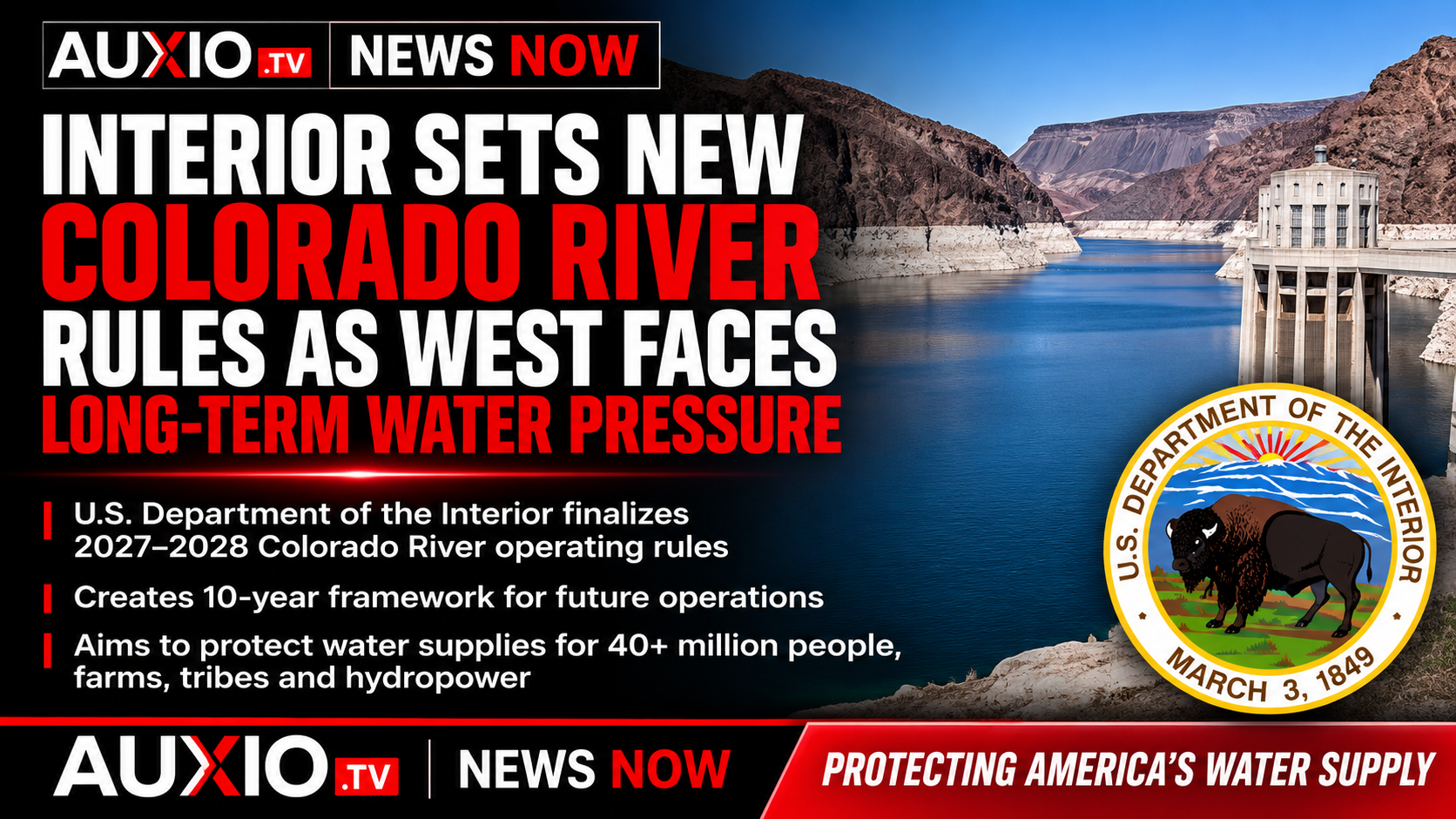
  • Interior Sets New Colorado River Rules as West Faces Long-Term Water Pressure

    Interior Sets New Colorado River Rules as West Faces Long-Term Water Pressure

    By Auxio.tv News | August 29, 2026

    The U.S. Department of the Interior has finalized new operating rules for the Colorado River, setting the framework for how Lake Powell and Lake Mead will be managed through a period of historically low water levels.

    The new 2027–2028 Operating Guidelines also establish a broader 10-year decision framework for future river operations. Interior says the goal is to protect critical infrastructure, preserve water deliveries and give the seven Colorado River Basin states more flexibility to respond to worsening drought conditions. 

    The need is obvious.

    Interior says the combined contents of Lake Powell and Lake Mead are now at levels not seen since before Lake Powell began filling in the 1960s. The Colorado River serves more than 40 million people, supports 5.5 million acres of farmland, provides hydropower across seven states and remains vital to 30 tribes and two Mexican states. 

    Under the new rules, Lake Powell releases will be tied more closely to actual hydrology, with an effort to keep the reservoir at or above 3,510 feet to protect operations at Glen Canyon Dam.

    For 2027, Lake Mead deliveries to Lower Basin states are expected to be reduced by 1.25 million acre-feet. 

    That is where the tradeoff becomes clear.

    Water cannot be allocated by political preference alone when the river itself is producing less of it.

    Every gallon preserved in one reservoir is a gallon that cannot be used somewhere else at the same time.

    Agriculture, cities, tribes, hydropower and environmental needs are all competing for the same limited supply.

    Interior’s new framework does not eliminate that conflict.

    It creates a structure for managing it.

    The department is emphasizing voluntary agreements, conservation, coordinated reservoir operations and additional flexibility for storing and moving conserved water. It also leaves room for the Basin states to continue negotiating longer-term agreements during the next several years. 

    That may be the most important part of the policy.

    The federal government can set operating rules.

    It cannot create water that is not there.

    The success of the new framework will therefore depend on whether states, tribes and major water users can adapt faster than reservoir conditions deteriorate.

    For the West, the real issue is no longer whether shortages are coming.

    They are already here.

    The question is how those shortages will be divided — and whether the system can remain reliable while doing it.

    Auxio.tv News Now