Tag: Maria Moore

  • Rich Carozza Puts Experience, Housing and Water Infrastructure at Center of Southampton Supervisor Campaign

    Rich Carozza Puts Experience, Housing and Water Infrastructure at Center of Southampton Supervisor Campaign

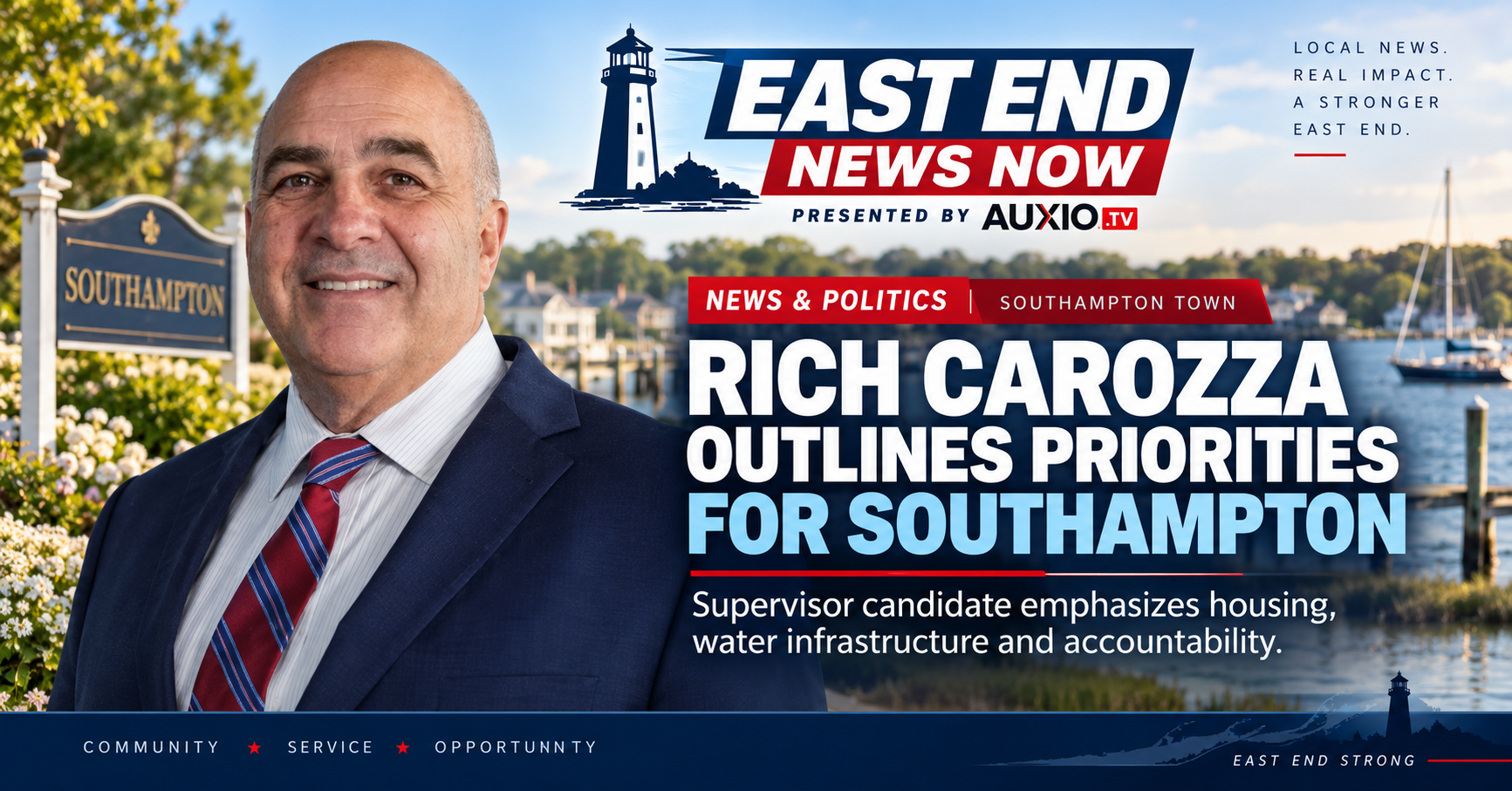
    Rich Carozza is making experience and municipal problem-solving central themes of his campaign for Southampton Town Supervisor, laying out an agenda that focuses on several of the Town’s persistent challenges: housing affordability, water quality, infrastructure and the way major projects are handled at Town Hall.

    Carozza’s campaign website identifies him as the Southampton Republican Committee’s nominee for supervisor in the November 2026 election, where he is challenging incumbent Supervisor Maria Z. Moore. Southampton Town’s official website confirms Moore currently serves as supervisor. 

    Rather than centering his campaign on a single issue, Carozza is presenting his professional background as part of his case for the job.

    According to his campaign, Carozza has more than 35 years of involvement in Long Island politics and experience in real estate development and financial services. The campaign says his work has included financial planning, capital formation, real estate management and site development, along with experience working with municipal officials on land-use, zoning and development matters. It also states that he holds a master’s degree in public administration from LIU Post. Those biographical details are campaign-provided. 

    His policy platform concentrates heavily on development and infrastructure.

    On housing, Carozza proposes increasing housing supply, supporting workforce housing for Town residents and using Town assets and financial tools to address affordability. His platform also singles out Hampton Bays for economic-development initiatives, infrastructure investment and additional parking solutions. 

    Water quality is another major component. Carozza is proposing the development of three sewer districts — East, Central and West — as part of a broader effort to reduce nitrogen entering local waters. His campaign argues that expanded sewer infrastructure could help address pollution associated with harmful algal blooms, low oxygen levels and habitat degradation. 

    Carozza is also calling for changes in how major Town projects and expenditures are presented to residents. His campaign proposes public-comment opportunities related to project spending, additional disclosure regarding project goals and implementation, and what it describes as a stronger requirement for public support before major expenditures move forward. 

    The office he is seeking carries substantial administrative and financial authority. Under Southampton Town’s description of the position, the supervisor serves as the Town’s chief administrative and fiscal officer, presides over Town Board meetings and participates as a voting member of the board. 

    That makes the 2026 supervisor contest a decision not simply over personalities but competing approaches to managing Town government and addressing growth, housing and infrastructure.

    For Carozza, the campaign’s initial pitch is clear: his professional and governmental experience, combined with an infrastructure-focused agenda, is what he wants Southampton voters to consider as the race develops.

    Learn more about his campaign here: https://www.richcarozza.com/

  • Moore Faces Republican Challenge as Southampton Voters Weigh Town Hall’s Record

    Moore Faces Republican Challenge as Southampton Voters Weigh Town Hall’s Record

    SOUTHAMPTON, N.Y. — Southampton Town Supervisor Maria Moore will face Republican Richard “Rich” Carozza this November, giving voters a choice between continuing the current Town Hall administration and turning to a challenger arguing that Southampton needs a different approach.

    Suffolk County Board of Elections filings list Moore as the Democratic candidate and Carozza as the Republican candidate for Southampton Town Supervisor.

    Unlike a race between two newcomers, this election comes with something voters can already measure: a governing record.

    Moore is the incumbent. The supervisor is Southampton Town’s chief administrative and fiscal officer, presides over the Town Board and plays a central role in the management of town government.

    That means questions involving housing, development, permitting, infrastructure, spending and the efficiency of Town Hall are not merely campaign talking points. They are also legitimate questions about the performance of the current administration.

    A Race About Results

    Southampton remains one of the most desirable — and expensive — places to live in the region.

    Yet the prosperity associated with the Hamptons exists alongside persistent problems that affect year-round residents much differently than seasonal visitors.

    Housing remains difficult for many working families to afford. Employers continue to operate in a market where workers may have to commute considerable distances because they cannot live near their jobs. Residents and builders regularly encounter a complicated land-use and permitting system. Wastewater infrastructure remains a major long-term undertaking. Traffic and development continue to generate disputes throughout the town.

    None of these problems began with Maria Moore.

    But incumbents eventually have to answer a different question from challengers: what has improved while they have been in charge?

    Moore has served as supervisor since taking office following the 2023 election and previously served as mayor of Westhampton Beach.

    She now oversees an administration with responsibilities spanning finance, human resources, land management, the Building Department, municipal works, public safety and major town projects.

    The 2026 campaign therefore gives voters an opportunity to evaluate more than promises.

    They can evaluate execution.

    Carozza Makes the Case for Change

    Carozza enters the contest arguing that Southampton Town government can operate more effectively.

    His background includes experience in business, real estate, land use and government, areas that intersect directly with several of the town’s most persistent challenges.

    His campaign has emphasized housing, bureaucracy, development approvals, sewer infrastructure and clean water.

    Those issues give the challenger an obvious line of attack.

    If housing affordability remains a crisis, what policies have actually produced additional attainable housing?

    If residents and businesses believe Town Hall is too cumbersome, which procedures can be simplified?

    If wastewater infrastructure is essential to protecting drinking water and the bays, how quickly are projects moving from planning to completion?

    And if the cost of living continues to make Southampton increasingly difficult for middle-income families, younger residents and workers, what can town government realistically do about it?

    Carozza will still have to do more than identify frustrations.

    A challenger promising faster government must explain what he would change, how he would pay for it and where he would draw the line between streamlining development and protecting community character.

    Those details will determine whether his candidacy develops into a substantive alternative or merely a referendum on dissatisfaction with the incumbent.

    Southampton’s Central Contradiction

    The politics of Southampton are complicated because residents often want things that conflict with one another.

    They want more affordable housing but frequently resist greater density.

    They want a quicker permitting process but also demand extensive scrutiny of new development.

    They want cleaner water and expanded sewer infrastructure but may object to the costs and construction required to build it.

    They want businesses to thrive but increasingly live in communities where the people working in those businesses cannot afford to reside.

    There are no painless solutions to those problems.

    That makes the supervisor’s race less about who can promise everything and more about which candidate is willing to identify the tradeoffs.

    For Moore, that means defending the choices her administration has already made.

    For Carozza, it means demonstrating that his proposed changes would work better.

    Incumbency Means Accountability

    One advantage of an incumbent election is that voters do not have to rely entirely on campaign literature.

    Town budgets exist.

    Projects have timelines.

    Applications have processing times.

    Housing initiatives can be counted.

    Infrastructure projects can be measured against schedules and costs.

    Residents can compare what was promised with what was delivered.

    That should be where much of the 2026 supervisor campaign is fought.

    Rather than another election dominated by party labels, Southampton voters would benefit from specific answers on measurable questions:

    How much has town spending changed?

    How long does it take to move common applications through Town Hall?

    How many attainable or workforce housing units have actually been created?

    Which major sewer and wastewater projects are on schedule, delayed or over budget?

    What portions of the town’s comprehensive planning efforts have translated into policy?

    And what would either candidate do differently beginning in January?

    Moore enters the election asking voters to continue the administration already running Southampton Town.

    Carozza is asking them to conclude that the current approach is not producing enough.

    That is the choice.

    The campaign between now and November should provide the evidence voters need to make it.

    East End Now | Auxio.tv News